

Finding a good T-shirt supplier looks easy on Instagram. You search “Tirupur T-shirt manufacturer,” message three pages, ask for rates, and suddenly everyone claims to be a “direct factory.” One says MOQ is 50 pieces. Another says 500 pieces. One offers ₹120 T-shirts, another quotes ₹280 for the same design. Confusing, right?
That is exactly why understanding Tirupur t shirt manufacturer MOQ matters.
If you are a small fashion brand, Instagram seller, uniform supplier, college merch seller, gymwear startup or retail shop owner, Tirupur can be a goldmine. But only if you know how the market works. Without basic sourcing knowledge, you may end up paying trader rates, accepting poor fabric, or placing an order with someone who is not actually manufacturing anything.
This guide breaks down the real meaning of MOQ, product-wise minimum quantities, fabric quality checks, costing logic, private label decisions, supplier verification and negotiation scripts. Think of it as your practical buyer’s handbook before you source from Tirupur.
Why Tirupur Is India’s Knitwear Capital for T-Shirts
Tirupur in Tamil Nadu is one of India’s most important knitwear and garment manufacturing hubs. For T-shirts, polos, kidswear, innerwear, sportswear, hoodies and cotton basics, Tirupur has a strong ecosystem of yarn suppliers, knitting units, dyeing houses, compacting units, printing units, stitching factories, washing units, packing teams and exporters.
That means a T-shirt can move through multiple specialised stages within the same cluster. This is what makes Tirupur powerful for bulk buyers.
For a retailer or small brand, the benefit is simple: you can source closer to the manufacturing base instead of buying from city traders who add their margin. But here is the catch. Not every supplier you find online is a real manufacturer. Many are aggregators, resellers or small traders who take your order and get it made somewhere else.
That is why your first job is not only to ask for “best rate.” Your first job is to understand Tirupur t shirt manufacturer MOQ, production process and supplier type.
What Does MOQ Mean in Tirupur Manufacturing?
MOQ means Minimum Order Quantity. It is the minimum number of pieces a manufacturer is willing to produce or supply in one order.
In Tirupur, MOQ is not random. It depends on:
- Fabric type
- GSM
- Colour count
- Size ratio
- Printing or embroidery requirement
- Pattern complexity
- Whether fabric is ready or needs dyeing
- Whether you want private label branding
- Whether the product is plain, oversized, polo, hoodie or kidswear
- Whether you are buying ready stock or custom manufacturing
A Tirupur t shirt manufacturer MOQ for ready stock may be very low, sometimes 20–50 pieces. But custom manufacturing with your own fabric colour, label, neck tape, print and packing can easily need 100–500 pieces per style or colour.
So when a supplier says “MOQ 100 pieces,” always ask:
“Is this 100 pieces total, 100 pieces per colour, or 100 pieces per design?”
That one question can save you from a major misunderstanding.
MOQ by Product Type: Plain T-Shirts, Polos, Hoodies, Co-Ords and Kidswear
Different products have different production realities. Here is a practical breakdown.
1. Plain Round Neck T-Shirts
Plain round neck T-shirts usually have the lowest MOQ because they are easy to produce and often available in ready stock.
For ready stock, some suppliers may accept small quantities like 20, 30 or 50 pieces. For custom colours, custom GSM, custom label or special sizing, MOQ can increase.
Plain T-shirts are best for:
- Instagram resellers
- Event merchandise
- College groups
- Corporate gifting
- Retail shops
- Small D2C brands testing the market
If you are new, start here before jumping into complicated styles.
2. Oversized T-Shirts
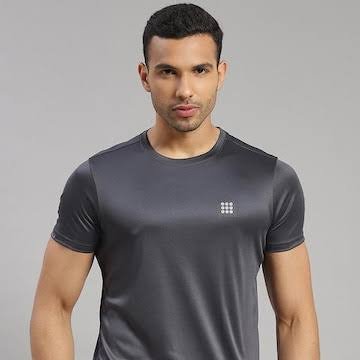
Oversized T-shirts are popular among streetwear brands, Gen Z fashion pages and Instagram sellers. But they need better patterning, shoulder drop, sleeve proportion and fabric weight.
The Tirupur t shirt manufacturer MOQ for oversized tees may be higher than regular round neck T-shirts because the fit is not standard. If you want 240 GSM French terry or heavy cotton, expect higher fabric cost and stricter MOQ.
For oversized T-shirts, always ask for:
- Shoulder measurement
- Chest measurement
- Length
- Sleeve length
- Fabric GSM
- Bio-wash or silicon wash
- Shrinkage control
A cheap oversized T-shirt with bad patterning will look like a loose baniyan, not streetwear.
3. Polo T-Shirts
Polo T-shirts usually have a higher MOQ than basic tees because they require collar knitting, placket stitching, buttons and more finishing.
Polos are good for:
- Uniform suppliers
- Corporate orders
- School or college merchandise
- Retail menswear shops
- Sports clubs
For polos, ask whether the collar is flat knit, rib collar or self-fabric collar. Also ask whether the quoted price includes embroidery, logo, buttons and packing.
4. Hoodies and Sweatshirts
Hoodies need heavier fabric, rib, drawcords, kangaroo pockets, brushing or fleece finishing. Because of this, the MOQ and working capital requirement are higher.
If you are a small brand, avoid starting with hoodies unless you already have confirmed demand. They look attractive, but they block more money in inventory.
5. Co-Ords and Tracksuits
Co-ords are trendy but slightly risky for first-time buyers because they involve two garments: top and bottom. Fit issues double. Size ratio becomes more important. Colour matching also matters.
The MOQ for co-ords may be counted as sets, not pieces. Always clarify whether “100 MOQ” means 100 tops + 100 bottoms, or 100 complete sets.
6. Kidswear T-Shirts
Kidswear may look small, but it is not always cheaper. Size grading is more complex, and buyers are more sensitive to comfort, colour bleeding and skin-friendliness.
If you are sourcing kidswear, check:
- Softness
- Neck stretch
- Print safety
- Colour fastness
- Stitching comfort
- Shrinkage
For kidswear, do not compromise on fabric just to reduce cost.
Fabric Checklist: GSM, Cotton, Bio-Wash, Combed Cotton and Compact Yarn
Before asking for rates, learn the fabric language. A manufacturer cannot quote properly if you simply say, “T-shirt ka rate batao.”
GSM: The Weight of the Fabric
GSM means grams per square metre. It tells you how heavy or light the fabric is.
Common T-shirt GSM ranges:
- 160–180 GSM: Daily wear, summer T-shirts, budget retail
- 180–200 GSM: Better quality round neck T-shirts
- 220–240 GSM: Oversized tees, streetwear, premium drops
- 260+ GSM: Heavyweight fashion or winter wear
For Indian summers, 180 GSM cotton is often more wearable than very heavy fabric. For streetwear, 240 GSM gives a better fall and premium feel.
Cotton Type
Ask whether the fabric is:
- Carded cotton
- Combed cotton
- Compact cotton
- Cotton-poly blend
- Organic cotton
- Supima or premium cotton
Combed cotton feels smoother than basic carded cotton. Compact cotton usually has better strength and surface finish. If you are building a serious brand, do not compare only rates. Compare yarn and finish.
Bio-Wash
Bio-wash is a finishing process that improves softness and reduces surface fuzz. For retail and private label T-shirts, bio-wash can make the product feel more premium.
When comparing quotes, ask:
“Is bio-wash included in this price?”
Many first-time buyers compare a non-washed basic T-shirt with a bio-washed premium T-shirt and think one supplier is expensive. Actually, the product itself is different.
Shrinkage
A good T-shirt should not shrink badly after washing. Ask the supplier about shrinkage percentage. Also test one sample by washing it before approving bulk production.
Colour Fastness
Dark colours like black, navy, maroon and bottle green should not bleed heavily. If you are buying for retail, colour bleeding can lead to customer complaints and returns.
Private Label vs Ready Stock: Which Is Better for New Retailers?
This is one of the biggest decisions for new buyers.
Ready Stock
Ready stock means the supplier already has T-shirts available. You can buy smaller quantities, get faster delivery and test demand.
Ready stock is best if:
- You are starting an Instagram store
- You want to test colours and sizes
- You have limited budget
- You need urgent delivery
- You do not want to manage production
The downside is that many other sellers may be selling the same product.
Private Label Manufacturing
Private label means the T-shirt is made for your brand. You can choose fabric, GSM, fit, colour, label, print, packing and branding.
Private label is best if:
- You want brand identity
- You have repeat demand
- You want better margins
- You are building a D2C brand
- You need custom sizing or design
The downside is higher MOQ, longer production time and more responsibility. If the design does not sell, the stock is yours.
For most beginners, the smart route is: start with ready stock, understand demand, then move to private label.
Costing Example: Fabric + Stitching + Printing + Packing + Freight
Let us understand how a T-shirt cost is built. This is only an example. Actual rates will change by supplier, season, cotton price, GSM and order quantity.
Suppose you want a 180 GSM cotton round neck T-shirt with a small chest print.
The costing may include:
- Fabric cost
- Knitting and dyeing
- Cutting
- Stitching
- Printing
- Washing or finishing
- Brand label
- Size label
- Polybag packing
- Carton packing
- GST
- Freight to your city
So when one supplier quotes ₹150 and another quotes ₹220, do not immediately choose the cheaper one. Ask what is included.
Questions to ask:
- Is fabric included?
- Is GST included?
- Is printing included?
- Is packing included?
- Is freight included?
- Is brand label included?
- Is this ready stock or fresh production?
- Is sample cost adjustable in bulk order?
A clear quote is better than a cheap quote.
How to Identify a Real Manufacturer vs Trader
This is where many buyers get trapped. A trader is not always bad. Some traders are useful because they can arrange small quantities and mixed products. But you should know who you are dealing with.
A real manufacturer usually has:
- Production setup or factory tie-up
- Cutting, stitching or finishing capacity
- Fabric knowledge
- Clear MOQ structure
- GST invoice
- Product samples
- Factory address
- Production timeline
- Ability to explain fabric, GSM and finishing
- Past bulk order references
A trader usually:
- Shares many random catalogues
- Avoids technical questions
- Gives very fast “best price” without details
- Does not explain fabric quality
- Cannot provide proper production photos
- Pushes immediate payment
- Keeps changing rates
Again, traders are not automatically wrong. But if someone claims to be a direct manufacturer, verify it.
Use GST details, video call, sample order, factory photos and invoice matching before placing a large order.
Questions to Ask Before Placing a Bulk Order
Before you pay advance, ask these questions clearly on WhatsApp or email.
Product Questions
- What is the fabric composition?
- What is the GSM?
- Is the fabric combed, compact or carded cotton?
- Is bio-wash included?
- What is the shrinkage percentage?
- What colours are available?
- What sizes are available?
- Can you share a size chart?
- Is this ready stock or fresh production?
- Can you make a sample first?
MOQ Questions
- What is the exact MOQ?
- Is MOQ per colour, per design or total order?
- Can I mix sizes within the MOQ?
- Can I mix colours?
- What is the MOQ for private label?
- What is the MOQ for printing?
- What is the MOQ for embroidery?
Payment and Delivery Questions
- What is the advance amount?
- When is the balance payment due?
- Will you provide GST invoice?
- What is the production timeline?
- Which transport do you use?
- Who pays freight?
- What happens if pieces are defective?
- Will you share photos before dispatch?
- Can I arrange third-party inspection?
- Do you accept repeat orders at the same rate?
These questions make you sound like a serious buyer, not a random rate-checking customer.
Negotiation Script for First-Time Buyers
Negotiation in Tirupur is not only about asking, “Best rate kya hai?” That line is overused. A better approach is to show seriousness, clarity and repeat potential.
Here is a practical script.
Buyer:
Hi, I am sourcing T-shirts for my retail/Instagram/private label brand. I am looking for 180 GSM cotton round neck T-shirts. First order will be small, but I am looking for a repeat supplier if quality and delivery are good.
Supplier:
What quantity?
Buyer:
Initially I want to test 100 pieces in mixed sizes. If the response is good, I can repeat monthly. Please confirm whether your MOQ is per colour or total quantity.
Supplier:
MOQ is 100 pieces per colour.
Buyer:
Understood. Since this is my first order, can we do 100 pieces across two colours, 50 each, at a slightly adjusted rate? I am okay to pay sample cost and confirm bulk after checking fabric and stitching.
Supplier:
Rate will increase.
Buyer:
That is fine. Please share two rates:
- 100 pieces mixed colour trial order
- 300 pieces repeat order rate
Also confirm GSM, cotton type, bio-wash, GST, packing and freight separately. I want to compare properly and avoid confusion later.
This script works because you are not begging for a discount. You are structuring the order smartly.
Common Mistakes First-Time Buyers Make
Mistake 1: Asking Only for the Lowest Rate
Low rate is useless if fabric is poor, stitching is weak or colour bleeds. Always compare specifications.
Mistake 2: Not Understanding MOQ
Many buyers think MOQ means total order. But suppliers may mean per colour or per design. Clarify this first.
Mistake 3: Skipping Samples
Never place a large custom order without checking a sample. Even if the sample is paid, it is worth it.
Mistake 4: Ignoring Size Chart
Indian sizing varies a lot. One supplier’s medium may be another supplier’s small. Always approve the size chart.
Mistake 5: Not Checking Supplier Identity
Check GST, address, invoice name, bank account name and business consistency. If everything is different, be careful.
Mistake 6: Forgetting Freight
A T-shirt may look cheap at factory rate, but after packing, GST and freight, your landed cost may increase.
Mistake 7: Ordering Too Many Designs
For a first order, avoid 10 designs and 8 colours. Start with fewer styles and test demand.
Final Retailer Checklist Before Payment
Before paying advance to any supplier, tick this checklist:
- Supplier name verified
- GST number checked
- Factory or business address confirmed
- Product sample approved
- Fabric GSM confirmed
- Cotton type confirmed
- Bio-wash or finishing confirmed
- Size chart approved
- Colour options confirmed
- MOQ clarified per design/colour/total
- Printing or embroidery cost confirmed
- Label and packing cost confirmed
- GST invoice confirmed
- Freight responsibility confirmed
- Delivery timeline confirmed
- Defect policy discussed
- Advance and balance terms written clearly
- Bank account name matches supplier name
- Photos/videos requested before dispatch
- Final quote saved in writing
Do not rely only on phone calls. Keep everything on WhatsApp or email so there is a written record.
Final Thoughts: Source Smart, Not Just Cheap
Tirupur is one of the best places in India to source T-shirts, but only if you approach it like a serious buyer. The goal is not to find the cheapest supplier. The goal is to find the right supplier for your quantity, quality, budget and growth stage.
If you are a beginner, start with ready stock or low-MOQ products. Test your market. Understand your customer. Then move into private label manufacturing once you know what sells.
The biggest lesson is this: Tirupur t shirt manufacturer MOQ is not one fixed number. It changes by product, fabric, colour, branding, printing and supplier type. Once you understand that, you can negotiate better, avoid middlemen traps and source directly with more confidence.
Whether you are launching a streetwear label, supplying uniforms, selling on Instagram or stocking a retail shop, Tirupur can work beautifully for you. Just ask the right questions before you pay.
FAQs on Tirupur T Shirt Manufacturer MOQ
1. What is the usual Tirupur t shirt manufacturer MOQ?
The usual MOQ depends on the product. Ready stock T-shirts may be available in smaller quantities, while custom private label T-shirts usually require a higher MOQ. Always ask whether the MOQ is per colour, per design or total quantity.
2. Can I buy only 50 T-shirts from Tirupur?
Yes, some suppliers offer 50-piece orders, especially for ready stock. But for custom colours, printing, labels or special GSM, the MOQ may be higher.
3. Is Tirupur good for private label T-shirt manufacturing?
Yes, Tirupur is a strong hub for private label T-shirt manufacturing because it has fabric, stitching, printing, finishing and packing support within the same cluster.
4. How do I know if a Tirupur supplier is a real manufacturer?
Ask for GST details, factory address, production photos, video call, sample, size chart and invoice. A real manufacturer should be able to explain fabric, GSM, stitching, finishing and MOQ clearly.
5. What GSM is best for T-shirts in India?
For regular Indian summer wear, 180 GSM is a good practical option. For oversized streetwear or premium drops, 220–240 GSM gives a heavier and more structured feel.
6. Should I choose ready stock or private label as a beginner?
Beginners should usually start with ready stock to test demand. Once sales become regular, private label manufacturing can help build brand identity and better margins.
7. Can I negotiate MOQ with Tirupur manufacturers?
Yes, but negotiation works better when you sound serious. Ask for a trial order rate and a repeat order rate. Do not only ask for the lowest price.
8. Does the quoted T-shirt rate include GST and freight?
Not always. Always ask whether GST, packing, printing, labelling and freight are included. Your landed cost matters more than the basic factory rate.
9. What is the safest way to place a first order?
Start with a sample, confirm specs in writing, pay a reasonable advance, ask for production photos and clear the balance only after final confirmation.
10. Is Tirupur better than buying from city wholesalers?
If you need serious bulk sourcing or private label production, Tirupur can offer better control and direct manufacturing access. But for very small mixed orders, city wholesalers may sometimes be easier.
See Also
The Overhead Weight Dilemma: Difference Between 180 GSM and 240 GSM T Shirt
Wholesale Sourcing Essentials: A Practical Guide for New Retailers and Bulk Buyers in India
Cheapest T-shirts Market | T-shirts Direct Manufacturer | Wholesale T-shirt Manufacturer