


Introduction: Wholesale sourcing can make or break your business
Every successful retail business begins with one important skill: buying well. You can have a beautiful shop, good location, nice branding, and active social media, but if your purchase price is wrong, your quality is weak, or your supplier is unreliable, your profit will quietly disappear.
That is why understanding Wholesale Sourcing Essentials is so important for every newcomer in India. Wholesale markets are full of opportunity, but they are also full of confusion. You will find genuine manufacturers, smart traders, helpful agents, overconfident middlemen, duplicate products, fake claims, inflated prices, and sometimes outright scammers.
So, if you are new to wholesale sourcing in India, do not worry. Everyone starts somewhere. The trick is to enter the market with preparation, patience, and common sense. This guide explains the Wholesale Sourcing Essentials that every retailer, reseller, small business owner, and bulk buyer should know before placing their first big order.
What is wholesale sourcing?
Wholesale sourcing means buying products in bulk from manufacturers, importers, distributors, stockists, traders, or wholesale market suppliers at a lower price and then selling them at a margin.
In India, wholesale sourcing happens through many routes: physical wholesale markets, manufacturers, mandis, industrial clusters, online B2B platforms, trade fairs, WhatsApp supplier groups, and direct factory visits.
The first rule of Wholesale Sourcing Essentials is this: wholesale price is not always the lowest price. Sometimes the “wholesale” seller is just another trader adding margin. Your job is to understand the supply chain and identify where you can get the best combination of price, quality, reliability, and repeat supply.
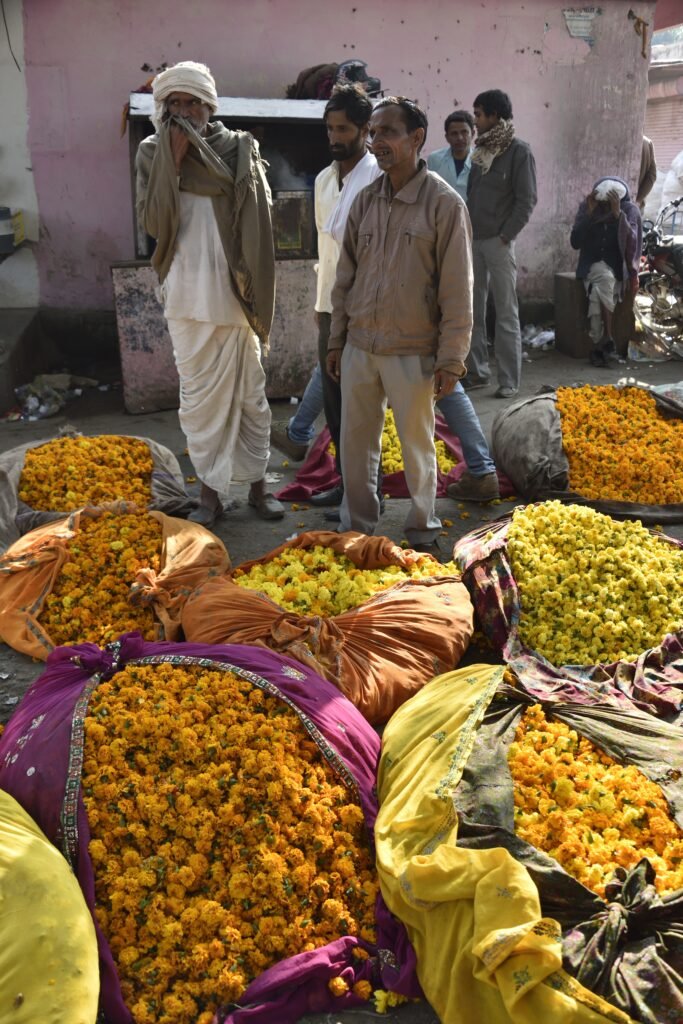
Step 1: Decide what you want to source before entering the market
Never enter a wholesale market without a product plan. Indian wholesale markets are exciting. You will see hundreds of products, and every shopkeeper will say, “Madam, yeh fast-moving hai” or “Sir, market mein sabse best rate hai.” If you are not clear, you will buy random stock.
Before going to the market, write down:
- Product category
- Target customer
- Expected selling price
- Maximum purchase price
- Minimum margin required
- Quantity needed
- Quality level required
- Packaging requirement
- Whether you need branded, unbranded, handmade, imported, or local products
This is one of the most important Wholesale Sourcing Essentials. A prepared buyer looks serious. An unprepared buyer looks easy to influence.
Step 2: Understand the Indian wholesale market structure
India has many types of wholesale markets. Each works differently.
There are large trading markets like Sadar Bazaar, Burrabazar, Chickpet, Crawford Market, Begum Bazaar, and Parry’s Corner. These are good for variety and quick sourcing. There are specialised clusters like Moradabad for brassware, Saharanpur for woodcraft, Khurja for ceramics, Tiruppur for garments, Surat for textiles, Panipat for home furnishing, Jaipur for handicrafts, and Ludhiana for woollens and hosiery.
Then there are mandis for fruits, vegetables, grains, spices, and agro products. There are also industrial areas where manufacturers sell directly.
A major part of Wholesale Sourcing Essentials is knowing where to buy what. If you buy from the wrong market, you may still get the product, but not at the best price or quality.
Step 3: Do basic market research before visiting
Before you physically visit a market, do some homework. Check online prices, retail prices, competitor prices, Instagram shops, local market rates, and B2B portals. Speak to two or three retailers if possible. Watch YouTube market walkthroughs, but do not blindly trust them. Many videos only show attractive items, not the real cost, MOQ, defect rate, or supplier reliability.
Good research helps you understand price range. If a wholesaler quotes ₹250 for a product that is selling online at ₹299, you know the margin is weak. If another supplier quotes ₹90 for a similar item, you know there may be a quality difference.
In Wholesale Sourcing Essentials, knowledge is your first protection against overpricing.
Step 4: Visit the market like a buyer, not like a tourist
When you enter a wholesale market for the first time, do not start buying immediately. Walk around. Observe rates, product quality, shop behaviour, crowd movement, packaging, and which suppliers are dealing with regular buyers.
Take notes. Take photos only after asking permission. Collect business cards. Ask basic questions. Compare at least 8 to 10 suppliers before deciding.
One of the most practical Wholesale Sourcing Essentials is to spend your first visit learning, not buying. If you must buy, buy small sample quantities.

Step 5: Learn how to identify genuine suppliers
A genuine supplier usually has a stable shop, clear product range, proper invoice system, repeat buyers, realistic pricing, and willingness to explain MOQ, quality, transport, and payment terms.
Be careful with suppliers who say everything is available, every product is “factory rate,” and every item is “top quality.” No supplier is best in everything.
Ask these questions:
- Are you a manufacturer, importer, distributor, or trader?
- Do you provide GST invoice?
- What is the minimum order quantity?
- Can I start with a sample order?
- What is your replacement policy?
- How often do designs change?
- Can you repeat the same design later?
- Do you handle transport?
- Can I visit your warehouse or factory?
Supplier verification is one of the strongest Wholesale Sourcing Essentials for new buyers.
Step 6: Verify GST, business identity, and basic documents
For serious wholesale buying, especially if you are placing a bulk order, check basic supplier details. Ask for GSTIN, invoice format, business name, address, payment account name, and product catalogue.
The bank account name should ideally match the business name or proprietor name. If the supplier gives a personal account for a large business transaction, be careful. In some small markets this is common, but for new suppliers and large orders, avoid unnecessary risk.
For food, cosmetics, packaged goods, toys, electrical products, and branded items, check relevant licence, label, batch details, expiry, MRP, and compliance. This is not about being difficult. It is about protecting your business.
One of the biggest Wholesale Sourcing Essentials is simple: verify before you trust.
Step 7: Start with samples before bulk order
A sample order can save you from a big loss. Many products look good in photos but fail in real use. Fabric may shrink. Colour may bleed. Zips may break. Metal may rust. Packaging may be weak. Electronics may stop working. Ceramics may arrive broken. Food items may have poor shelf life.
Before bulk buying, test:
- Product finish
- Size and weight
- Colour consistency
- Packaging quality
- Customer response
- Defect rate
- Transport safety
- Actual selling margin
In Wholesale Sourcing Essentials, sample testing is not a delay. It is insurance.
Step 8: Understand MOQ and do not get trapped by it
MOQ means minimum order quantity. Suppliers may say you must buy 50 pieces, 100 pieces, one carton, one bundle, or one full lot. Sometimes MOQ is genuine. Sometimes it is just a pressure tactic.
As a newcomer, do not block too much money in one product. Request mixed designs, smaller trial lots, or sample cartons. If the supplier refuses completely, move on unless the product is truly unique.
A smart Wholesale Sourcing Essentials approach is to buy less, test faster, and reorder winners. Dead stock is more dangerous than high price.
Step 9: Calculate landed cost, not just wholesale price
Wholesale price is not your real cost. Your real cost is landed cost.
Landed cost includes:
- Product price
- GST
- Packing
- Loading
- Transport
- Unloading
- Damage
- Storage
- Payment charges
- Labour
- Unsold stock risk
Suppose you buy a product for ₹100 and sell it for ₹150. It looks like ₹50 profit. But if transport, GST, packing, damage, and slow movement add ₹20, your real margin is much smaller.
This is one of the most ignored Wholesale Sourcing Essentials. New buyers get excited by low purchase price. Experienced buyers calculate the full cost.
Step 10: Negotiate smartly, not aggressively
Negotiation is normal in Indian wholesale markets. But negotiation does not mean fighting. A rude buyer may get a small discount once but lose long-term supplier support.
Start by asking the rate for your expected quantity. Then ask the rate for a higher quantity. Then ask if mixed designs are allowed. Then ask about transport, replacement, packing, and repeat-order pricing.
Good negotiation lines include:
- “If I repeat this every month, what rate can you give?”
- “Can you give a better rate if I take mixed designs?”
- “Can we start with a trial order and then increase quantity?”
- “What is your best rate with GST invoice?”
- “Can you support damage replacement?”
- “Can you include packing in this price?”
Negotiation is one of the most useful Wholesale Sourcing Essentials, but remember: the cheapest supplier is not always the best supplier.
Step 11: Beware of common wholesale scams
Scams happen in every market, offline and online. New buyers are easy targets because they are excited, inexperienced, and sometimes shy to ask hard questions.
Common scams include:
- Advance payment taken, goods not sent
- Sample quality good, bulk quality poor
- Top layer good, bottom layer defective
- Duplicate branded goods sold as original
- Fake GST invoice
- Wrong quantity packed
- Old stock sold as fresh stock
- Damaged goods mixed inside cartons
- Inflated transport charges
- Fake online supplier using stolen photos
- Urgency pressure: “Aaj payment karo, warna stock khatam”
Scam prevention is at the centre of Wholesale Sourcing Essentials. Trust slowly. Pay carefully. Inspect properly.
Step 12: Never pay full advance to a new supplier
This is very important. With a new supplier, avoid full advance payment unless you have verified the supplier properly and the amount is small enough to risk.
For first orders, try:
- Cash and carry
- Partial advance and balance before dispatch
- Payment after video inspection
- Payment through business account
- Written order confirmation on WhatsApp
- Invoice before dispatch
- Transport receipt after dispatch
Keep proof of every transaction. Save chats, invoices, payment screenshots, transport receipts, and product photos.
A practical Wholesale Sourcing Essentials rule is this: your money should move only when your proof is clear.
Step 13: Check goods before packing and dispatch
If you are buying physically, check products yourself. If goods are being shipped from another city, ask for photos and videos before packing. Ask the supplier to show the product, quantity, carton count, label, and transport booking slip.
For fragile items, ask for proper packing. For garments, ask for size ratio. For packaged goods, check MRP, expiry, batch number, and manufacturing details. For electronics, ask for warranty terms. For food items, check licence and shelf life.
In Wholesale Sourcing Essentials, inspection is not optional. It is your profit protection.
Step 14: Understand quality variation
Wholesale products often come in grades. A-grade, export surplus, local grade, factory second, damaged lot, old stock, and mixed lot can all have different prices.
If the rate is too low, ask why. Maybe the product is discontinued. Maybe it is rejected stock. Maybe size is odd. Maybe colour is not moving. Maybe packing is damaged.
There is nothing wrong with buying lower-grade stock if you know what you are buying and your customers accept it. But never buy blindly.
Quality clarity is one of the most practical Wholesale Sourcing Essentials for Indian markets.
Step 15: Build supplier relationships slowly
A good supplier is an asset. Once you find a reliable supplier, do not treat every transaction like a one-time bargain. Pay on time. Give feedback. Share which designs moved well. Inform them before festivals. Ask them to alert you about new arrivals.
Good suppliers often support regular buyers with better rates, early access, smaller MOQ, replacement support, and credit after trust is built.
Relationship-building is one of the underrated Wholesale Sourcing Essentials. In India, business runs on price, but it also runs on trust.
Step 16: Do not depend on one supplier
Even if one supplier is excellent, keep backup options. Prices change. Stock runs out. Transport gets delayed. Quality may drop. The supplier may prioritise larger buyers.
For each category, maintain at least three supplier contacts:
- Primary supplier
- Backup supplier
- Emergency supplier
This Wholesale Sourcing Essentials habit keeps your business safe during festive rush, sudden demand, transport strikes, or supply shortage.
Step 17: Learn market timing
Every wholesale category has a timing. Fruits and vegetables move early morning. Garments may have seasonal launches. Festive decor starts months before Diwali. Stationery has school-season demand. Gifts move before festivals, weddings, Valentine’s Day, New Year, and corporate gifting season.
If you buy late, the best designs are gone. If you buy too early, your money gets stuck. So timing is a skill.
One of the most important Wholesale Sourcing Essentials is to prepare a buying calendar. Plan your sourcing at least 45 to 90 days before major seasons.
Step 18: Avoid emotional buying
Wholesale markets are designed to tempt you. You will see colourful products, trending items, and “fast-moving” claims everywhere. But your shop has limited cash and limited space.
Before buying, ask:
- Will my customer actually buy this?
- What selling price can I keep?
- How quickly will it move?
- Can I return or replace it?
- Is it seasonal?
- Can I reorder it?
- Is the margin worth the risk?
Emotional control is a major Wholesale Sourcing Essentials lesson. In retail, unsold stock is silent loss.
Step 19: Keep records from day one
Do not depend on memory. Keep a simple purchase register or Excel sheet with supplier name, product, purchase price, quantity, GST, transport, selling price, margin, and sales performance.
After one month, you will know which products are winners and which are weak. After six months, your data will become your buying guide.
Data is one of the most powerful Wholesale Sourcing Essentials for small retailers. Big businesses use software. Small businesses can start with a notebook or spreadsheet.
Step 20: Know when to walk away
Sometimes the best deal is the deal you do not make. Walk away if:
- Supplier refuses basic verification
- Price keeps changing
- Goods are not shown properly
- Payment is demanded urgently
- Reviews are poor
- Invoice is not available
- Quality is inconsistent
- Supplier avoids written confirmation
- Product seems fake or illegal
- You feel pressured
Your instinct matters. If something feels wrong, pause. In Wholesale Sourcing Essentials, caution is not weakness. It is business maturity.
Do’s and don’ts for new wholesale buyers
Do’s
Do research before visiting the market.
Do compare multiple suppliers.
Do start with small orders.
Do verify business details.
Do calculate landed cost.
Do ask about damage and replacement.
Do keep payment proof.
Do maintain supplier records.
Do test products before scaling.
Do build long-term relationships.
Don’ts
Do not pay full advance to unknown suppliers.
Do not buy only because the price is low.
Do not trust photos blindly.
Do not ignore GST, expiry, label, or licence details.
Do not buy more than your selling capacity.
Do not accept damaged stock casually.
Do not depend on one supplier.
Do not skip quality checking.
Do not believe every “factory rate” claim.
Do not let urgency pressure your decision.
This do’s and don’ts list is the simplest form of Wholesale Sourcing Essentials for beginners.
Final wholesale sourcing checklist
Before placing an order, check:
- Product demand
- Supplier identity
- GST or business details
- Sample quality
- MOQ
- Final price
- GST and invoice
- Transport cost
- Packing quality
- Replacement policy
- Payment terms
- Delivery timeline
- Expected margin
- Risk of damage
- Reorder possibility
If all these points are clear, you can place the order with more confidence.
Conclusion: Wholesale sourcing is a skill, not a gamble
Wholesale sourcing in India can be very profitable, but only if you treat it like a skill. The market rewards patient buyers, not impulsive buyers. It rewards people who compare, verify, negotiate, test, calculate, and build relationships.
The real Wholesale Sourcing Essentials are simple: know your customer, know your product, know your supplier, know your cost, and know your risk. If you follow these basics, you can survive the confusion of Indian wholesale markets and slowly build a strong retail or bulk buying business.
Start small. Learn fast. Avoid shortcuts. Keep records. Respect good suppliers. Stay alert with new suppliers. Most importantly, never forget that profit is made at the time of buying, not only at the time of selling.
That is the heart of Wholesale Sourcing Essentials.