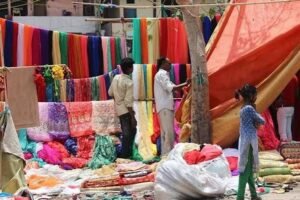

India has always been a country of textiles. From cotton fabric and silk sarees to readymade garments, winter wear, home furnishing fabric and export surplus clothing, almost every major city has a wholesale cloth market where retailers, traders, boutique owners, resellers and distributors buy goods at wholesale rates.
For a small business owner, the right wholesale cloth market can make a big difference. If you buy at the right price, you can sell with a better margin. If you choose the wrong market or buy without comparing rates, your profit may reduce even before your business starts.
Before we explore the markets, here are a few useful numbers:
- India’s population is more than 1.4 billion, creating a huge domestic demand for clothing, fabric and garments.
- India’s textile and apparel industry contributes around 2.3% to GDP and is one of the largest employment-generating sectors in the country.
- The textile sector directly employs over 45 million people, including weavers, traders, wholesalers, manufacturers, transporters and retailers.
- India’s textile and apparel market is estimated to be worth over US$170 billion, with strong growth expected in the coming years.
- Major textile hubs in India include Surat, Ahmedabad, Delhi, Mumbai, Kolkata, Bengaluru, Ludhiana and Tiruppur.
- India has hundreds of small and large cloth markets, but around 10–15 major wholesale textile clusters dominate bulk sourcing.
- Many wholesale cloth markets work through traders, agents, manufacturers, transporters and commission-based suppliers.
This guide is written for buyers who want to source cloth, fabric or garments at wholesale rates. Whether you run a retail shop, online clothing store, boutique, tailoring unit, weekly market stall or export business, this guide will help you understand where to buy what.
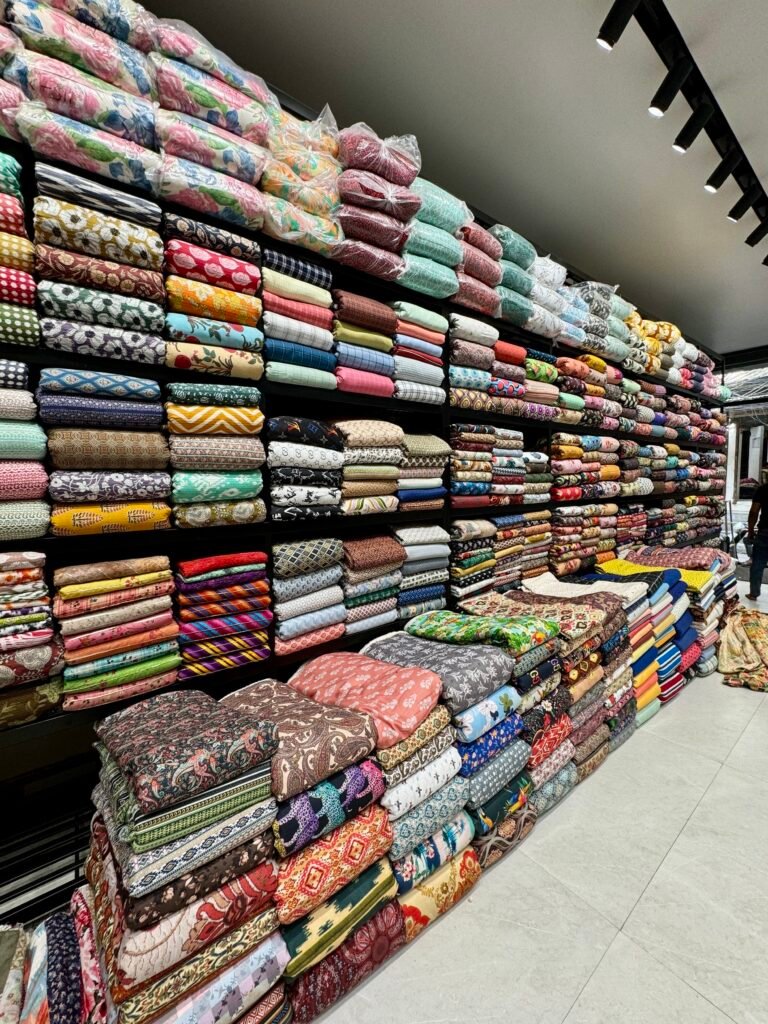
How to Use This Wholesale Cloth Market Guide
Every market has its own speciality. Some markets are better for sarees, some for cotton fabric, some for synthetic dress material, some for readymade garments and some for winter clothing.
So instead of listing markets randomly, this article is divided by product category. For every major wholesale cloth market, you will find:
- Unique characteristics of the market
- Products to buy
- What visitors can expect
- Bargaining tips
- Days open and timings
- Location guide with Google Map link
1. Wholesale Fabric Market for Dress Material, Shirting, Suiting and Running Cloth
Surat Textile Market, Gujarat
Overview:
Surat is one of the biggest textile hubs in India. If you are looking for synthetic fabric, dress material, sarees, lehenga fabric, dupatta fabric or printed material, Surat is one of the best places to begin. The main textile areas include Ring Road, Sahara Darwaja, Umarwada and Saroli.
For many buyers, Surat is the first name that comes to mind when they search for a wholesale cloth market for women’s ethnic wear and synthetic fabric.
Unique Characteristics:
Surat is especially popular for affordable and fast-moving textile items. The city is strong in polyester, georgette, chiffon, art silk, embroidery work, printed sarees and dress material. Many designs that later appear in retail shops across India first move through Surat’s wholesale textile network.
Products to Buy:
- Printed dress material
- Synthetic sarees
- Georgette and chiffon fabric
- Lehenga and blouse material
- Dupatta fabric
- Embroidered fabric
- Partywear fabric
- Art silk fabric
What Visitors Can Expect:
Surat has large textile complexes with hundreds of shops. Many wholesalers work through catalogues, sample pieces and bulk dispatch. If you are a serious buyer, you can find products for almost every price range.
This wholesale cloth market is ideal for retailers selling women’s wear, budget sarees, festive wear and online ethnic fashion.
Bargaining Tips:
Do not bargain on one piece. Ask for catalogue rate, bulk rate and transport rate. If you buy multiple designs from the same supplier, you may get a better overall rate.
Also compare fabric quality carefully. Two dress materials may look similar but the fabric weight, print quality and finishing may be different.
Days Open and Timings:
Usually Monday to Saturday, around 10 AM to 8 PM. Sunday is generally closed.
Location Guide:
Ring Road, Sahara Darwaja, Umarwada and Saroli textile belt, Surat.
Google Map: Surat Textile Market
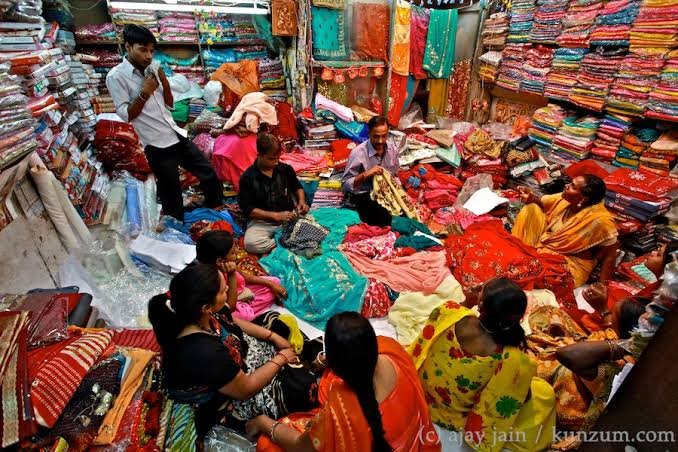
New Cloth Market and Maskati Cloth Market, Ahmedabad
Overview:
Ahmedabad is another important wholesale cloth market destination in India. It is especially useful for cotton fabric, grey cloth, shirting, suiting, denim, bedsheet fabric, uniform fabric and dress material.
New Cloth Market, Maskati Market, Sarangpur and Kalupur are popular textile trading areas. Ahmedabad is a good market for buyers who want practical fabric at competitive wholesale rates.
Unique Characteristics:
Ahmedabad has a strong cotton textile base. If your business deals in everyday fabric, uniforms, bedsheets, men’s shirting or basic garment material, this market can offer good sourcing options.
Unlike some fashion-heavy markets, Ahmedabad is more focused on utility, volume and regular supply.
Products to Buy:
- Cotton fabric
- Grey fabric
- Shirting and suiting
- Denim fabric
- Uniform fabric
- Bedsheet material
- Dress material
- Garment fabric
What Visitors Can Expect:
This is a serious trading market. Many shops deal in rolls, bales and bulk bundles. Retail-style browsing may not work in every shop. Go with product clarity and approximate quantity.
For buyers comparing wholesale cloth rates, Ahmedabad can be very useful because similar products are available across multiple traders.
Bargaining Tips:
Ask about width, GSM, shrinkage and colour fastness. A cheaper fabric is not always better if it shrinks, fades or tears easily.
If you are buying for resale, always calculate your landing cost after transport, GST, packaging and wastage.
Days Open and Timings:
Usually Monday to Saturday, around 10 AM to 8 PM or 9 PM. Sunday is generally closed in many wholesale areas.
Location Guide:
Sarangpur, Kalupur, Raipur Gate and Maskati Market textile belt, Ahmedabad.
Google Map: New Cloth Market Ahmedabad
Katra Neel, Chandni Chowk, Delhi
Overview:
Katra Neel in Chandni Chowk is a famous wholesale cloth market in Delhi. It is popular for fabric, suit material, lehenga fabric, menswear fabric, sarees, blouse material and dress material.
This market is especially useful for tailors, boutique owners, designers and small retailers in North India.
Unique Characteristics:
Katra Neel gives you variety. You can find simple fabric for daily wear as well as festive fabric for weddings and special occasions. Since it is located in Chandni Chowk, buyers can also explore nearby lanes for bridal wear, trims, lace, borders and accessories.
Products to Buy:
- Suit material
- Men’s shirting and suiting
- Salwar suit fabric
- Lehenga fabric
- Saree fabric
- Blouse material
- Dupattas
- Lace and borders nearby
What Visitors Can Expect:
Expect narrow lanes, old shops, high crowd and heavy bargaining. It is not a relaxed shopping area. You should go with time, patience and a proper buying list.
This wholesale cloth market is best for buyers who want variety in a compact area.
Bargaining Tips:
Visit several shops before finalising. Ask for wholesale price, bulk price and repeat buyer price. If you are buying for resale, mention that clearly.
Do not finalise only based on design. Open the fabric, check the quality and ask about colour bleeding or shrinkage.
Days Open and Timings:
Usually around 11 AM to 8 PM. Many Chandni Chowk markets remain closed on Sunday, but timings can vary by shop and season.
Location Guide:
Katra Neel, Chandni Chowk, Old Delhi. Nearest metro: Chandni Chowk.
Google Map: Katra Neel Cloth Market Delhi
Mangaldas Market, Mumbai
Overview:
Mangaldas Market in Kalbadevi is one of Mumbai’s best-known textile markets. It is useful for fabric, lace, trims, dress material, blouse material, saree fabric and boutique cloth.
For designers, boutique owners and resellers, this wholesale cloth market offers good variety in a busy old-city setting.
Unique Characteristics:
Mangaldas Market is especially useful when you want fabric and matching accessories in one area. You can compare material, match lace, buy borders and source small or medium quantities.
It is not always the cheapest market in India, but it offers convenience and variety for Mumbai-based buyers.
Products to Buy:
- Dress material
- Cotton fabric
- Synthetic fabric
- Saree fabric
- Blouse material
- Lace and trims
- Borders
- Boutique fabric
What Visitors Can Expect:
The market is crowded and old-style. Parking is difficult, so public transport or cab is better. Many shops are packed with fabric rolls and samples.
Bargaining Tips:
Ask if the quoted rate is retail, semi-wholesale or wholesale. Mumbai sellers may offer better rates if you buy multiple metres or repeat quantities.
Check for fabric defects, stains and cuts before payment.
Days Open and Timings:
Generally Monday to Saturday, around 10 AM to 8 PM. Timings may vary by shop.
Location Guide:
Kalbadevi, near Crawford Market and Lohar Chawl, Mumbai.
Google Map: Mangaldas Market Mumbai
2. Saree Wholesale Market and Ethnic Wear Sourcing
Chickpet Market, Bengaluru
Overview:
Chickpet is one of Bengaluru’s oldest textile markets and a popular wholesale cloth market for sarees, dress material, blouse fabric and traditional wear.
It is especially known for silk sarees and South Indian ethnic wear. Buyers from Karnataka and nearby states often visit Chickpet for saree sourcing.
Unique Characteristics:
Chickpet is useful for buyers who sell sarees, festive wear, blouse material and traditional women’s clothing. You can find both budget and premium options depending on the shop.
Products to Buy:
- Silk sarees
- Cotton sarees
- Blouse fabric
- Dress material
- Traditional women’s wear
- Kids’ ethnic wear
- Festive clothing
What Visitors Can Expect:
Expect narrow lanes, old shops and heavy crowd, especially during wedding and festival seasons. Some shops sell retail, while others are more wholesale-focused.
This wholesale cloth market is best visited with clear product requirements.
Bargaining Tips:
Ask for wholesale rates only when buying multiple pieces. Saree prices depend on fabric, zari work, weaving, finishing and design. Compare carefully before buying.
If you are buying silk sarees, ask about fabric composition and authenticity.
Days Open and Timings:
Usually Monday to Saturday, around 10 AM to 9 PM. Sunday is commonly closed.
Location Guide:
Chickpet, Bengaluru. Nearest metro: Chickpet or KR Market.
Google Map: Chickpet Market Bengaluru
Burrabazar, Kolkata
Overview:
Burrabazar is one of Kolkata’s oldest and largest wholesale trading areas. It is not only a cloth market but a massive wholesale zone for many products. For textile buyers, it is important for sarees, dress material, garments and affordable fabric.
If you are sourcing for eastern India or the north-eastern states, Burrabazar is a very useful wholesale cloth market.
Unique Characteristics:
Burrabazar is strong in cotton sarees, Bengal cotton, synthetic sarees, partywear sarees and budget garments. It serves many small retailers and traders from West Bengal, Bihar, Odisha, Jharkhand and the North-East.
Products to Buy:
- Cotton sarees
- Synthetic sarees
- Printed sarees
- Partywear sarees
- Dress material
- Budget garments
- Ethnic wear
What Visitors Can Expect:
Expect crowd, traffic, old buildings and a fast-moving wholesale environment. First-time visitors may need time to understand the market layout.
Bargaining Tips:
Relationships matter in Burrabazar. If you plan to buy regularly, try to build trust with 2–3 good suppliers instead of chasing only the lowest rate.
Ask about GST bill, transport, minimum order quantity and return policy.
Days Open and Timings:
Usually Monday to Saturday, around 10 AM to 9 PM. Many wholesale textile shops remain closed on Sunday.
Location Guide:
Burrabazar / Barabazar, near MG Road, Kolkata.
Google Map: Burrabazar Cloth Market Kolkata
3. Wholesale Garment Market for Readymade Clothing
Gandhi Nagar Market, Delhi
Overview:
Gandhi Nagar in East Delhi is one of India’s biggest wholesale garment markets. It is popular for kurtis, jeans, shirts, trousers, kidswear, nightwear, hosiery and budget readymade garments.
For many small retailers, Gandhi Nagar is not just a wholesale cloth market but a complete readymade clothing sourcing hub.
Unique Characteristics:
This market is ideal for people who do not want to buy fabric and stitch garments. You can buy ready-to-sell products in bulk and resell them through shops, online platforms, local markets or social media.
Products to Buy:
- Kurtis
- Jeans
- Shirts
- Trousers
- Kidswear
- Nightwear
- Women’s tops
- Leggings
- Winter garments
What Visitors Can Expect:
This is a very busy business market. Many sellers prefer bulk buyers and may not entertain single-piece customers during rush hours.
You should be ready to buy in lots, size sets or minimum quantities.
Bargaining Tips:
Ask for lot rate, carton rate and reseller rate. Do not bargain like a retail customer. If you show serious buying intent, sellers may show better stock and better prices.
Always check size ratio, colour ratio and defective-piece policy.
Days Open and Timings:
Usually Tuesday to Sunday, around 10 AM to 8 PM or 8:30 PM. Monday is commonly the weekly closing day.
Location Guide:
Gandhi Nagar, East Delhi. Nearest metro: Seelampur.
Google Map: Gandhi Nagar Market Delhi
Khaderpet Market, Tiruppur
Overview:
Tiruppur is one of India’s most important knitwear and garment manufacturing hubs. Khaderpet Market is popular for T-shirts, innerwear, nightwear, kidswear, track pants and export surplus garments.
For buyers looking for affordable knitwear at wholesale rates, this wholesale cloth market is very useful.
Unique Characteristics:
Tiruppur is different from many other markets because it is close to manufacturing units. This helps buyers find fresh stock, surplus stock and bulk garment options.
Products to Buy:
- T-shirts
- Baniyans
- Innerwear
- Kidswear
- Nightwear
- Track pants
- Cotton knitwear
- Export surplus garments
What Visitors Can Expect:
Expect affordable products, bulk lots and mixed quality. Some products may be export surplus, while others may be regular domestic stock.
Bargaining Tips:
Check stitching, fabric quality, size consistency and colour bleeding. For export surplus, ask whether sizes are complete or mixed.
Do not buy large quantities without checking sample pieces properly.
Days Open and Timings:
Generally Monday to Saturday, around 10 AM to 9 PM. Sunday is commonly closed for many wholesale shops.
Location Guide:
Khaderpet, near Tiruppur Railway Station.
Google Map: Khaderpet Market Tiruppur
4. Woollen Garments and Winter Wear Wholesale Market
Ludhiana Cloth and Hosiery Markets, Punjab
Overview:
Ludhiana is one of India’s strongest markets for woollen garments, hosiery, sweaters, thermals, shawls, socks and winter wear. Important areas include Chaura Bazaar, Akal Market, Ghumar Mandi and nearby textile lanes.
If your business sells winter products, Ludhiana is a practical wholesale cloth market to explore before the season begins.
Unique Characteristics:
Ludhiana is seasonal but powerful. Buyers from North India and hill states often source sweaters, jackets, thermals and hosiery from here.
The best time to source is before peak winter demand starts.
Products to Buy:
- Sweaters
- Jackets
- Thermals
- Shawls
- Stoles
- Woollen kidswear
- Socks
- Caps
- Hosiery garments
What Visitors Can Expect:
Markets become very active before and during winter. Traffic and parking can be difficult in old market areas.
Bargaining Tips:
Buy before peak season for better rates and better variety. Ask for size ratio, colour availability and whether unsold stock can be exchanged.
For winter wear, quality matters a lot because customers quickly notice poor stitching, pilling and shrinkage.
Days Open and Timings:
Usually Monday to Saturday, around 10 AM to 9 PM. Some shops may open on Sundays during peak season, but it is better to confirm before visiting.
Location Guide:
Chaura Bazaar, Akal Market and Ghumar Mandi, Ludhiana.
Google Map: Chaura Bazaar Ludhiana
5. Home Textile and Furnishing Cloth Markets
Ahmedabad, Surat and Mumbai Textile Belts
Overview:
For bedsheets, curtains, sofa fabric, lining fabric, towels, cushion covers and home furnishing material, Ahmedabad, Surat and Mumbai are useful sourcing points.
This category is slightly different from regular garment buying. Here, buyers must focus on width, fabric weight, durability and wash performance.
Unique Characteristics:
Ahmedabad is strong in cotton and bedsheet fabric. Surat is useful for printed and synthetic material. Mumbai offers variety in furnishing cloth, lace, trims and boutique fabric.
Products to Buy:
- Bedsheet fabric
- Curtain fabric
- Sofa fabric
- Cushion fabric
- Towels
- Table linen
- Lining fabric
- Lace and borders
What Visitors Can Expect:
You may need to visit fabric shops, furnishing shops and textile agents separately. Some suppliers also deal with hotel, hospital and institutional supply.
Bargaining Tips:
Ask for rates by metre, roll and bale. For institutional orders, negotiate based on repeat supply and total quantity.
Always check fabric width before calculating profit. A cheaper rate per metre may not be cheaper if the width is smaller.
Days Open and Timings:
Most textile markets operate Monday to Saturday between 10 AM and 8 PM or 9 PM.
Location Guide:
Start with New Cloth Market Ahmedabad, Ring Road Surat and Mangaldas Market Mumbai.
Quick Comparison of Major Wholesale Cloth Markets in India
| Product Category | Best Market | Best For |
|---|---|---|
| Synthetic fabric and dress material | Surat | Sarees, suits, lehenga fabric, printed cloth |
| Cotton fabric and shirting | Ahmedabad | Cotton rolls, grey fabric, bedsheet fabric |
| Fabric and ethnic material | Katra Neel, Delhi | Suit material, lehenga fabric, menswear fabric |
| Readymade garments | Gandhi Nagar, Delhi | Kurtis, jeans, shirts, kidswear |
| Sarees and silk | Chickpet, Bengaluru | Silk sarees, blouse material, traditional wear |
| Sarees and eastern India supply | Burrabazar, Kolkata | Cotton sarees, synthetic sarees, dress material |
| Knitwear and T-shirts | Tiruppur | T-shirts, innerwear, export surplus garments |
| Winter wear | Ludhiana | Sweaters, thermals, shawls, hosiery |
| Lace, trims and boutique fabric | Mangaldas Market, Mumbai | Lace, borders, dress material, boutique fabric |
Useful Tips for Buying from a Wholesale Cloth Market
- Do Your Research:
Before visiting any wholesale cloth market, decide what you want to buy. Are you looking for sarees, dress material, fabric rolls, readymade garments, T-shirts, winter wear or furnishing fabric? Each market has a speciality. Research the market, weekly closing day, nearest transport and approximate wholesale rates before visiting. - Research Average Prices Before Shopping:
Price research is very important. Check online B2B platforms, talk to other retailers and compare rates from different markets. If you know the average wholesale cloth rates, you can bargain with confidence. Without price knowledge, it is easy to overpay. - Start Low:
In most wholesale markets, bargaining is expected. Start below your target rate so there is room for negotiation. But do not quote an unrealistic price. Wholesalers take serious buyers more seriously than casual bargain hunters. - Be Polite and Friendly:
A polite approach can help you get better treatment. Wholesale traders deal with many customers every day. If you are respectful, clear and business-like, they may show you better stock and explain the difference between qualities. - Visit Multiple Vendors:
Never buy from the first shop. Visit several vendors and compare price, quality, packaging, minimum order quantity and transport options. The lowest rate is not always the best deal if the quality is poor. - Consider Transportation:
Fabric rolls and garment cartons can be heavy. Before buying, ask how the goods will be transported. Many wholesale cloth markets have local transporters, parcel offices and courier agents nearby. Add transport cost to your final buying price. - Go Early:
Visit the market early. You will avoid heavy crowd, get better attention from sellers and see fresh stock. Parking is also easier in the morning, especially in old markets like Chandni Chowk, Burrabazar, Kalbadevi and Ludhiana. - Payment Options:
Many sellers prefer cash, especially for small purchases. UPI is common now, and larger traders may accept bank transfer. Credit and debit cards may not be accepted everywhere. Carry multiple payment options to avoid inconvenience. - Wholesale Purchase:
Wholesalers are interested in quantity. Avoid bargaining for single pieces. Ask for minimum order quantity, lot price, carton price, size ratio and bulk discount. If you behave like a serious bulk buyer, you are more likely to get genuine wholesale rates.
Final Words
A good wholesale cloth market can become the foundation of a profitable textile or garment business. India has strong markets for almost every category. Surat is excellent for synthetic dress material and sarees. Ahmedabad is useful for cotton and grey fabric. Gandhi Nagar Delhi is ideal for readymade garments. Chickpet Bengaluru and Burrabazar Kolkata are strong for sarees and ethnic wear. Tiruppur is one of the best places for knitwear and T-shirts. Ludhiana is the right destination for winter wear.
The best way to buy at wholesale rates is to compare, inspect and negotiate. Do not depend on only one supplier. Visit multiple shops, check fabric quality, understand minimum order quantity and calculate your final landed cost after transport and taxes.
If you are searching for a wholesale cloth market in India, use this guide as your starting point. Go prepared, buy smartly and build long-term supplier relationships. In wholesale trade, repeat buyers often get better prices, better stock and better credit terms.
For any trader, retailer or reseller, profit starts at the time of purchase. The better your buying rate, the better your selling margin.
See Also
Biggest Wholesale Cloth Market in India | Saree, Nighty, Lungi & Dress Materials at Lowest Price
Mumbai Biggest kids Wear Manufacturers/ kids Cloth wholesale Market
Sourcing Woolens from Ludhiana Wholesale Market: Complete Guide for Retailers
Navigating the Surat Saree Wholesale Market: The Ultimate MOQ & Sourcing Guide for Boutique Owners