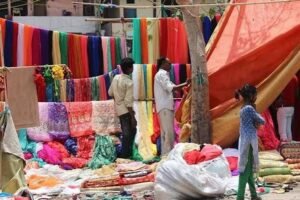

If you run a saree boutique, an online ethnic wear store, or a home-based reselling business in India, all roads eventually lead to one destination: Surat. Known globally as the textile hub of India, Surat is the powerhouse behind those gorgeous, fluid georgettes, rich art silks, and heavily embroidered bridal sarees you see trending on Instagram and local markets.
But let’s be real. Stepping into the bustling lanes of the Surat saree wholesale market for the first time can feel incredibly overwhelming. The sheer volume of traders, the endless rows of textile markets on Ring Road, and the fast-talking wholesalers can make your head spin.
The biggest roadblock for most boutique owners? Understanding the Surat saree wholesale market MOQ (Minimum Order Quantity), deciphering trader lingo, and navigating the unique parcel booking system.
If you don’t know the unwritten rules of the game, you risk either overbuying stock you can’t sell or being turned away by top-tier manufacturers.
This comprehensive guide is designed to change that. Let’s break down exactly how to source like a pro, crack the MOQ codes, and build a highly profitable inventory for your boutique.
Why Surat Dominates the Synthetic and Art Silk Saree Wholesale Industry
Have you ever wondered why almost every major retail saree showroom in India sources from Gujarat? It all comes down to vertical integration and massive economies of scale.
Surat is the undisputed king of man-made fibers (MMF). From spinning the polyester yarn and weaving the greige fabric to dyeing, printing, and adding intricate embroidery—everything happens within a few square kilometers. Because the supply chain is incredibly tight, Surat manufacturers can produce high-quality georgette sarees, crisp chiffon sarees, and stunning silk blend sarees at prices that traditional handloom clusters simply cannot match.
For a boutique owner, this means unbeatable profit margins. Whether your customers want daily-wear floral prints or glamorous Bollywood-inspired party wear, Surat produces it faster, cheaper, and in grander volumes than anywhere else in the country.
Who is this Guide For? The Ideal Surat Buyer Profile
The Surat textile ecosystem caters to different scales of businesses. You will fit perfectly into the Surat sourcing model if you are:
- Boutique Owners: Looking for premium, curated collections with unique embellishments to sell at a premium.
- Social Media Resellers: Running WhatsApp groups, Instagram pages, or Facebook Live sessions looking for fast-moving fashion.
- Small-Town Retailers: Looking to stock up a physical storefront with high-margin, festive, and bridal daily-wear items.
- E-commerce Sellers: Sourcing high-volume, trendy designs that can be packaged and shipped rapidly across India.
Understanding Main Saree Categories and Fabric Types in Surat
To talk to a Surat trader efficiently, you need to know your fabrics. If you walk into a shop and ask for “good material,” you’ll mark yourself as an amateur. Instead, ask for these specific categories based on your boutique’s target audience:
1. Georgette and Chiffon Sarees (The Daily & Party Wear Staples)
These are the absolute bread and butter of the Surat industry. Available in weights ranging from 60 grams to weightless variants, georgette sarees are favored for their beautiful drape and durability. Digital prints, foil prints, and sublimation prints on these fabrics are massive hits for casual and semi-formal wear.
2. Silk Blend and Art Silk Sarees (The Budget Luxury)
Authentic silk is expensive, but Surat’s silk blend sarees (including Banarasi art silk, Kanjivaram duplicates, and cotton-silk mixes) offer the royal look of handloom at a fraction of the cost. These are perfect for boutique owners catering to wedding guests and festive shoppers.
3. Fancy Embroidery and Work Sarees
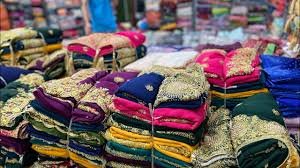
From intricate Zari work and sequence embroidery to Kashmiri threadwork and stone embellishments, Surat’s workmanship is legendary. These heavy sarees are usually sold as individual high-margin pieces or small, curated sets.
Demystifying the Surat Saree Wholesale Market MOQ Realities
Let’s address the elephant in the room: Minimum Order Quantity (MOQ). Many boutique owners assume they have to buy thousands of pieces to get wholesale rates. That is a myth. The market operates on several distinct purchasing tiers:
| Sourcing Type | Average MOQ Requirement | Best Suited For | Profit Margin Potential |
| Single Piece Sourcing | Generally No (Except premium semi-wholesalers) | Trial testing / Dropshipping | Low to Medium |
| Catalog / Set-Wise | 1 Set (4 to 12 sarees) | Premium Boutiques & Online Sellers | High |
| Bundle Buying (Matching) | 1 Bundle (Usually 4 standard colors) | Regular Retailers & Budget Stores | Medium to High |
| Full Lot / Volume Buying | 100+ Pieces / Multiple Bundles | Large Scale Wholesalers & E-com | Maximum |
1. The Single Piece Myth
If a seller on YouTube claims they sell “single pieces at factory prices,” they are almost certainly a retailer or a semi-wholesaler masquerading as a manufacturer. True Surat manufacturers do not sell single pieces to retail walk-ins because it disrupts their packaging workflow.
2. Catalog Buying (The Boutique Sweet Spot)
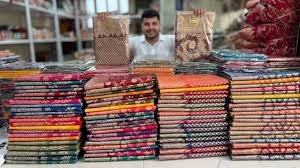
A “catalog” is a pre-selected collection designed by a manufacturer. A single catalog contains 4 to 12 sarees featuring the same fabric base but different colors, print designs, or embroidery styles.
- The Rule: You must buy the entire catalog set. You cannot pick and choose only the red or pink saree out of the bunch.
3. Bundle Buying
Unlike catalogs where designs vary, a bundle consists of the exact same design and embroidery style, replicated across 4 or 5 different color options (e.g., Pink, Blue, Green, Yellow). This is excellent for brick-and-mortar stores where customers ask, “Do you have this design in another color?”
How Surat Catalog Sourcing Works for Small Businesses
If you are a boutique owner, catalog buying is your golden ticket. It allows you to display a massive variety of designs to your clients without sinking all your capital into a single look.
When you buy a catalog, it comes with a high-quality physical lookbook (photobook) or a digital drive link filled with professional model-shoot images. You can use these images directly on your Instagram page or website to take pre-orders before the physical stock even lands at your boutique!
Pro-Tip for Smart Sourcing: Look for “Mini-Catalogs.” Some clever manufacturers create smaller catalog sets of just 4 to 6 pieces instead of the traditional 12. This keeps your investment low while maximizing variety.
Deciphering Common Surat Trader Language and Lingo
To ensure you aren’t treated like a tourist who can be overcharged, you need to know the local market vocabulary. Drop these terms naturally during your conversations:
- Ready Stock: This means the goods are packed, sitting in the godown, and ready to be loaded into your transport vehicle immediately.
- Running Item: A design that is currently viral or selling rapidly across India. If a wholesaler says, “Madam, yeh running item hai,” it means it has guaranteed market demand.
- Fresh Design: A brand-new pattern or fabric print that has just come off the processing mill this week.
- Catalog Rate vs. Loose Rate: The catalog rate is the discounted wholesale price you get when you buy the whole set. The loose rate (if offered) is higher because you are breaking the set.
Crucial Quality Checks: Don’t Blindly Trust the Sample
When you sit in a comfortable, air-conditioned showroom on Ring Road, the salesman will show you a gorgeous sample piece. But before you finalize a deal and authorize a shipment, you must confirm the underlying quality metrics:
The 5-Point Boutique Quality Checklist
- Saree Cut and Length: Standard Indian sarees should be 5.5 meters long, plus a 0.8-meter blouse piece (Total 6.3 meters). Cheap manufacturers cut costs by reducing the length to 5.2 or 5.0 meters. Always ask: “Saree ka cut poora 6.30 (che-tees) hai na?”
- Blouse Piece Attachment: Ensure the blouse piece is running (attached) or explicitly provided. For premium collections, check if the blouse fabric matches the catalog description (e.g., brocade, jacquard, or silk).
- Border Finishing and Overlock: Turn the saree inside out. Look at the embroidery border. Are there loose threads hanging everywhere? Is the lace stitched securely, or will it come off after one dry clean?
- Colour Bleeding: Ask explicitly about colorfastness, especially for deep reds, indigos, and blacks in art silk or cotton-mix categories.
- Fall and Pico Space: Ensure there is enough plain fabric left at the beginning of the saree to attach the fall properly without ruining the structural design.
Understanding the Surat Transport and Parcel Booking System
Once you’ve successfully negotiated your Surat saree wholesale market MOQ and purchased your stock, how do you get it to your home town? You don’t carry it on a train or flight with you. You use Surat’s legendary textile transport network.
The Anatomy of a Textile “Parcel”
In Surat, goods are not shipped in cardboard boxes; they are packed into large, heavy-duty gunny bags wrapped in waterproof plastic and stitched tight with jute twine. This is known as a Parcel.
- The Minimum Parcel Weight: Most commercial transport agencies (like V-Trans, Jaipur Golden, TCI, or local regional transporters) charge by the parcel. A standard wholesale parcel needs to weigh at least 30 kg to 50 kg to be economically viable.
- Saree Count per Parcel: A single standard transport parcel can hold anywhere from 80 to 120 synthetic printed sarees, or about 40 to 60 heavy bridal embroidered sarees.
- The Process: The wholesaler will pack your purchased catalogs, label them with your boutique’s name and city, and hand them over to the transport agency. The transporter will issue a Bilty (LR / Transport Receipt). You will need to show this Bilty at your local city transport godown to claim your goods.
How to Negotiate with Surat Wholesalers Without Sounding Like a Tourist
If you walk into a textile market holding a selfie stick, asking for “one or two pieces,” or looking visibly confused, prices will magically jump by 20% to 30%. Here is how you carry yourself like an industry insider:
- Talk in Quantities, Not Single Prices: Instead of asking, “How much for this one?” ask, “What is the catalog rate for this volume, and what is the minimum parcel size for transport?”
- Dress Professionally and Comfortably: Avoid overly flashy clothing. Wear comfortable footwear because you will be walking kilometers across multi-story market complexes like Millennium Market, New Textile Market (NTM), or Avadh Textile Market.
- Don’t Settle on the First Shop: The shops on the ground floor of major markets usually pay the highest rent, which is often reflected in their slightly higher prices. Explore the 1st, 2nd, and 3rd floors where primary manufacturers and stockists often keep their primary offices.
- Keep Your Card Ready: Carry business cards that explicitly state your boutique name, location, and GST number (if applicable). Handing over a business card instantly establishes you as a serious trade buyer.
Sourcing Calendar: Best Buying Seasons to Beat Festive and Wedding Demand
Timing is everything in the fashion retail business. If you buy your Diwali stock in October, you are already too late. Your competitors have already filled their shelves, and Surat manufacturers will be choked with pending orders, causing massive shipping delays.
Plan your sourcing trips using this strategic calendar:
1. The Festive Rush (Diwali, Durga Puja, Navratri)
- Best Sourcing Window: June to August.
- What to Focus On: Vibrant georgettes, heavy embroidery work, designer digital prints, and bright festive colors like marigold yellow, royal blue, and crimson red.
2. The Winter Wedding Season
- Best Sourcing Window: September to October.
- What to Focus On: Art silk, Banarasi blends, heavily embellished lehenga-style sarees, and premium stone-work collections.
3. The Spring/Summer Collection
- Best Sourcing Window: January to February.
- What to Focus On: Pastel shades, lightweight chiffons, organza sarees, breathable cotton-linen blends, and minimalistic floral patterns.
Conclusion: Ready to Build Your Saree Empire?
Navigating the Surat saree wholesale market MOQ doesn’t have to be intimidating once you understand the mechanics of catalogs, bundles, and parcel weights. By keeping your sourcing structured, testing the market with small catalog sets, and performing strict quality checks, you can scale your boutique business to incredible new heights.
Start small, build strong relationships with two or three trusted registered traders, and gradually increase your parcel sizes as your customer base expands.
Are you planning your first trip to Surat, or are you looking to switch from online wholesale platforms to direct sourcing? Let us know if you have any questions about specific market locations or transport setups!
See Also
Surat Saree Wholesale Market
Saree wholesale from surat | saree at factory rate
Wholesale Sourcing Essentials: A Practical Guide for New Retailers and Bulk Buyers in India