


If you are buying packaging materials for a retail shop, manufacturing unit, warehouse or e-commerce business, the quoted wholesale rate is only one part of the purchasing decision. The actual cost depends on material quality, dimensions, order quantity, customisation, taxes and transportation.
Packaging material wholesale rates in India vary by product specification, supplier, order volume and delivery location. A plain corrugated carton, a printed retail box and a heavy-duty shipping box may have very different prices, even when their dimensions are similar.
For businesses that purchase packaging regularly, comparing quotations from wholesalers and manufacturers can help reduce procurement costs without compromising product safety. The key is to compare identical specifications, negotiate according to realistic quantities and calculate the final landed cost before placing an order.
This guide explains how packaging wholesale prices work, where to compare suppliers, what to ask before buying and how to identify the most economical option for your business.
1. What Are the Wholesale Rates for Packaging Materials in India?
Packaging materials are sold in different units, including pieces, rolls, kilograms, bundles, cartons and bulk production lots. Consequently, there is no single wholesale rate that applies to every packaging product.
A quotation for 1,000 standard cartons cannot be compared directly with a quotation for 1,000 custom-printed boxes. Similarly, two rolls of bubble wrap may have different prices because of differences in length, thickness and material quality.
The following table explains the main product categories and the details buyers should compare.
| Packaging product | Common buying unit | Main price factors |
|---|---|---|
| Corrugated shipping boxes | Per piece or bulk lot | Dimensions, board construction, strength and quantity |
| Folding cartons and product boxes | Per piece or production lot | Paperboard grade, size, printing and finishing |
| Packing tape | Per roll or carton | Roll length, width, thickness and adhesive quality |
| Bubble wrap | Per roll or bulk quantity | Roll dimensions, thickness and bubble size |
| Stretch film | Per roll or carton | Film thickness, width, length and weight |
| Paper bags | Per piece or bundle | Paper quality, size, handles and printing |
| Plastic packaging bags | Per piece, kilogram or bundle | Polymer type, dimensions, thickness and quantity |
| Protective inserts and dividers | Per piece or production lot | Material, design, dimensions and tooling |
| Custom-printed packaging | Per piece or production lot | Artwork, printing method, setup costs and order volume |
Why you should not rely on one quoted price
Suppose three suppliers quote for a carton of the same external dimensions. One offers a lower price but uses a different board construction. Another includes delivery, while the third quotes only the ex-factory price.
The lowest headline quotation may not offer the best value.
Before comparing prices, make sure every supplier is quoting for the same dimensions, material, quality requirements, quantity, tax treatment and delivery basis.
For a business buying packaging regularly, this simple step can prevent misleading comparisons and unexpected costs.
2. Corrugated Box Wholesale Prices: What Determines the Rate?
Corrugated boxes are among the most important packaging products for e-commerce sellers, distributors, manufacturers and retailers.
Their wholesale rates depend on the amount and type of paper used, the box dimensions, construction, printing and production quantity.
Box dimensions
Larger cartons generally require more material than smaller ones. Custom dimensions may also affect production efficiency and material wastage.
Provide suppliers with the internal dimensions required to accommodate your product, including protective inserts where necessary.
Board construction and strength
Corrugated cartons are available in different constructions, including 3-ply and 5-ply options, as well as stronger specialised designs.
The appropriate construction depends on the product’s weight, fragility, stacking conditions, storage duration and transport route.
Do not automatically choose the cheapest or thickest option. Specify the protection your product requires and ask the supplier to recommend an appropriate construction.
Plain boxes versus printed boxes
Plain cartons generally avoid some of the additional costs associated with branded packaging. Printed boxes may involve artwork preparation, printing plates or other setup requirements, depending on the process.
For a new design, ask whether these charges are separate from the quoted per-piece rate. Also confirm whether the setup can be reused for repeat orders.
Order quantity
Manufacturers often have production costs that are spread across the number of boxes produced. Ordering more identical boxes can therefore reduce the unit cost.
However, the benefit depends on the specification and production process. Larger orders also tie up working capital and require storage space.
Ask for quotations at several quantities before deciding how much to purchase.
Paper and other input costs
Corrugated-box prices are affected by paper costs and other manufacturing expenses. The Indian Corrugated Case Manufacturers’ Association, in collaboration with CRISIL, publishes the CORRDEX index to track movements in corrugated-box manufacturing costs. This can provide useful context when reviewing price revisions or negotiating repeat contracts.
For the latest available index and its coverage, consult the CRISIL–ICCMA CORRDEX resource.
Buying tip: When a supplier increases the quoted rate, ask which input or specification has changed. For repeat purchases, compare the revised quotation with your previous order rather than assuming every increase is justified.
3. Where to Compare Packaging Material Wholesale Rates in India
Packaging buyers can source from traditional wholesale markets, specialist distributors and direct manufacturers. The right option depends on the product, required quantity, delivery location and level of customisation.
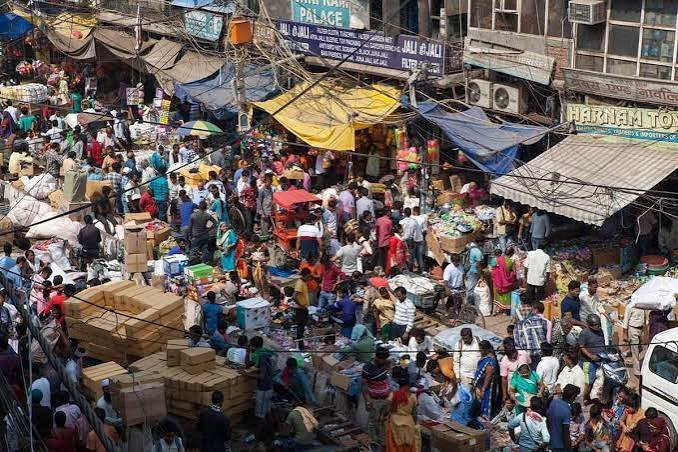
Delhi: Sadar Bazaar and surrounding commercial areas
Sadar Bazaar and nearby trading areas are useful starting points for investigating packaging supplies, bags, wrapping products and other wholesale merchandise.
A supplier directory lists several packaging-related businesses in the wider Sadar Bazaar area, including:
- Arfa Carry Pack: Listed in Shop No. 11, Pan Mandi, Khursheed Market, Delhi. The directory associates the business with packaging materials and carry bags.
- Krishna Plastics: Listed at 627, Gali No. 11, Sadar Bazaar, Delhi, with packaging bags and pouches among its listed products.
- Bhavya Associates: Listed at 4692, Deputy Ganj Steel Market, Delhi, with corrugated boxes and folding cartons among its listed categories.
These are supplier leads, not guaranteed current stockists. Confirm the business details, current address, product specifications and order quantities before visiting.
For a broader starting point, see the Sadar Bazaar packaging and corrugated-box supplier listings.
How to compare rates in Delhi
Contact several suppliers with the same specification and quantity. Ask whether they sell ready-stock packaging or manufacture products to order.
If you need standard bags, tapes or wrapping supplies, a stockist may be convenient. If you require customised corrugated cartons in large quantities, compare the quotations with those of manufacturers in Delhi NCR.
Traditional market lanes can be congested, so confirm shop locations and timings before travelling. Opening hours and weekly closures vary by business.
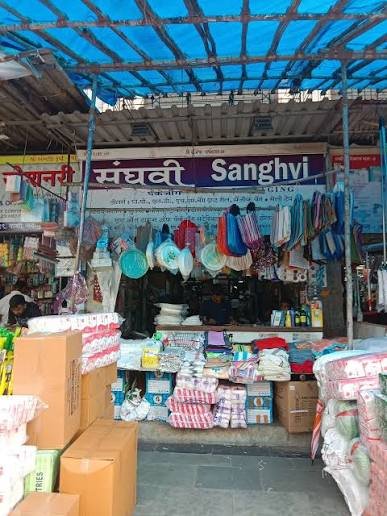
Kolkata: Burrabazar and surrounding trading areas
Burrabazar is a major commercial district in Kolkata, with trading businesses serving retailers, distributors and other buyers. Packaging-related suppliers operate across different streets and buildings, so buyers should identify the specific supplier rather than assume that every shop stocks the same products.
For example, business directories list packaging-related suppliers around Canning Street and Burrabazar. These may provide starting points for enquiries about boxes, bags and other packaging products.
A supplier directory also lists packaging-paper and box suppliers in Kolkata, including businesses in the wider Burrabazar area. You can begin with the Kolkata packaging supplier listings.
How to compare rates in Kolkata
Ask each supplier to quote against the same dimensions, material, order quantity and delivery location.
If you are sourcing bags or covers for garment and textile products, specify the size, material and intended use. For shipping cartons, confirm board construction and load requirements.
For a large or recurring order, compare local wholesale quotations with direct-manufacturer rates. A lower factory price may still be less economical once transport and handling are included.
Mumbai and other industrial sourcing centres
Businesses outside Delhi and Kolkata can compare local packaging distributors with manufacturers in their own region. Mumbai, the wider Maharashtra industrial belt, Delhi NCR and other manufacturing centres have businesses serving different packaging requirements.
For buyers who need custom cartons, protective packaging or regular production runs, the most useful supplier may be a specialist manufacturer rather than a traditional wholesale shop.
When comparing suppliers in another city, include freight, transit time, packaging for transport and the cost of handling defects or replacements.
Important: A market’s reputation does not guarantee that every supplier offers the same product range or the lowest price. Use the location to identify possible suppliers, then evaluate each quotation on its own merits.
4. How to Compare Wholesale Packaging Quotations
A good quotation comparison starts with a clear specification. If one supplier is quoting for a different product or delivery arrangement, the prices will not be directly comparable.
Use the following checklist when requesting quotations.
| Quotation detail | What to confirm |
|---|---|
| Product specification | Exact product type, material and dimensions |
| Quality | Board construction, thickness or other relevant performance details |
| Quantity | Total order quantity and minimum order quantity |
| Unit price | Whether the rate is per piece, roll, kilogram, bundle or lot |
| Printing | Setup charges, artwork, colours and finishing |
| Taxes | Whether GST is included or charged separately |
| Packing | Bundling, palletisation or protective packing charges |
| Freight | Whether delivery is included or billed separately |
| Payment terms | Advance, balance payment and any credit terms |
| Delivery schedule | Ready-stock dispatch or production lead time |
| Defect policy | Procedure for shortages, damage or non-conforming goods |
| Quote validity | Date until which the quoted price is valid |
Request prices at multiple quantities
Instead of asking for just one rate, request quotations at several realistic quantities.
For example, if you expect to buy 1,000 boxes per month, you could ask for prices at 500, 1,000 and 3,000 boxes, provided those quantities suit your actual requirements.
These are suggested comparison quantities, not standard industry minimums. A supplier may offer different price breaks depending on its production process.
This approach helps you understand the financial benefit of buying more—and whether that benefit justifies the extra inventory.
Compare like with like
Imagine Supplier A quotes for plain cartons and Supplier B quotes for printed cartons. Supplier A’s rate may be lower, but the two offers do not represent the same product.
Similarly, a quotation for a thicker bubble-wrap roll cannot be compared fairly with a thinner roll without considering length, thickness and coverage.
The aim is to identify the best price for the packaging performance your business needs, not simply the lowest number on a quotation.
5. How to Calculate the Landed Cost of Packaging Materials
The landed cost is the total cost of getting the purchased packaging to the place where your business will use it.
A useful starting formula is:
Landed cost = Product cost + applicable taxes + packing and handling + freight + loading and unloading + other applicable charges
The exact components depend on the supplier’s quotation and the transaction.
Example: comparing two supplier quotations
Consider a hypothetical purchase of 1,000 cartons. These figures are illustrative and are not current market rates.
| Cost component | Supplier A | Supplier B |
|---|---|---|
| Product cost | ₹20,000 | ₹18,500 |
| Freight and handling | ₹2,000 | ₹4,000 |
| Other applicable charges | ₹0 | ₹500 |
| Total before any separately applicable tax | ₹22,000 | ₹23,000 |
| Effective cost per carton before tax | ₹22.00 | ₹23.00 |
Supplier B quotes a lower product price, but its higher logistics and other charges make the total cost greater.
Before comparing actual offers, ensure that GST treatment and any other applicable charges are recorded consistently. Recoverable input tax credit may also affect the way a GST-registered business evaluates its economic cost, depending on its circumstances.
Calculate the cost of usable packaging
The cost per carton is not the only consideration. Defective boxes, incorrect dimensions and damaged deliveries can create additional expense.
If some packaging cannot be used, the effective cost of the usable units rises.
For recurring orders, monitor:
- Number of units delivered
- Number of defective or unusable units
- Freight and handling costs
- Replacement time
- Packaging-related damage to the products being shipped
A slightly higher quotation can offer better value if it delivers consistent quality and reduces wastage.
6. How to Negotiate Better Packaging Material Wholesale Rates
Wholesale negotiation works best when you know your requirements and understand the supplier’s cost drivers.
Ask for quantity-based pricing
Tell the supplier your realistic order volume and request price breaks for different quantities.
Useful questions include:
- What is your rate for 500 pieces, 1,000 pieces and 3,000 pieces?
- Does the rate change if I place a repeat monthly order?
- Can you combine standard sizes within the same order?
- Is there a discount for full-carton or full-production quantities?
Only commit to a larger order if you can use or store the packaging economically.
Negotiate the specification as well as the price
If a quotation is beyond your budget, ask whether the packaging can be redesigned without compromising its required performance.
For example, a more efficient box dimension may reduce material wastage. A standard box may cost less than a custom size. Plain packaging may be more economical than a printed design for certain uses.
However, do not reduce material quality blindly. Packaging that fails during transit can cost more than the initial saving.
Compare manufacturer and wholesaler rates
A wholesaler may offer ready stock, smaller quantities and a convenient range of products. A manufacturer may be better positioned to quote for large or repeat production orders.
Ask both types of supplier for a quotation where appropriate. Compare their prices, MOQs, delivery schedules and quality terms on the same basis.
Do not assume that a manufacturer will always be cheaper. Production setup, minimum runs, transport and storage can affect the final economics.
Use repeat orders as a negotiating advantage
If your business consumes packaging consistently, share your expected monthly or quarterly requirements.
A predictable order schedule may help suppliers plan production and stock. It also gives you a basis for negotiating repeat-order pricing, delivery commitments and quality standards.
For longer-term arrangements, agree on how price revisions will be communicated and how long quotations remain valid.
Avoid unrealistic bargaining
A very low target price may not be feasible for the required specification. Instead of pushing for an arbitrary discount, ask the supplier to explain the main cost components and identify practical ways to reduce the total cost.
A sustainable supplier relationship can be more valuable than a one-time discount that leads to inconsistent quality or delayed deliveries.
7. What Is the Minimum Order Quantity for Packaging Materials?
There is no universal MOQ for packaging materials in India. Minimum quantities depend on the product, supplier, production process, material availability and customisation.
Ready-stock tapes or bags may be available in small quantities, while custom-printed cartons may require a larger order.
For made-to-order packaging, MOQ can be affected by:
- Minimum material procurement requirements
- Production-machine setup
- Printing and artwork preparation
- Cutting dies or other tooling
- The number of sizes or designs in the order
- Packaging and dispatch requirements
How to manage MOQ when your business is small
If you are a small retailer or an early-stage e-commerce seller, ask suppliers about standard sizes, plain packaging and available stock before requesting a custom design.
You can also ask whether several sizes can be combined in one order, although the answer depends on the supplier’s production process.
Compare the cost of ordering a larger quantity with the cost of storing unused packaging. Custom-branded boxes can become obsolete if you change your logo, product dimensions or brand information.
The best MOQ is not necessarily the lowest quantity the supplier will accept. It is the quantity that balances unit cost, cash flow, storage and expected usage.
8. Wholesale Market vs Direct Manufacturer: Which Is More Economical?
The right sourcing channel depends on how much packaging you need and whether your requirements are standard or customised.
| Factor | Wholesale market or stockist | Direct manufacturer |
|---|---|---|
| Small orders | Often more convenient | May be limited by production MOQ |
| Mixed products | Useful for sourcing several items | Depends on the manufacturer’s range |
| Ready-stock availability | Can be suitable for immediate needs | Varies by product and production schedule |
| Custom sizes | Availability varies | Often better suited to made-to-order products |
| Printing and branding | Depends on the supplier | Often offers more production options |
| Bulk pricing | Depends on stock, quantity and supplier | May be competitive for large repeat orders |
| Transport | May be convenient for local purchases | Factory location can increase or reduce freight |
| Best suited for | Retailers, small businesses and mixed requirements | Manufacturers, distributors and predictable bulk demand |
Which should you choose?
Choose a wholesaler if you need ready-stock materials, smaller quantities or several different packaging products in one purchase.
Choose a manufacturer if you need custom dimensions, large production runs, branded packaging or recurring orders with consistent specifications.
Compare both if you are scaling up. A wholesaler may be the best option for your current volume, while direct manufacturing may become more economical as demand increases.
Always compare the landed cost, not just the unit rate.
9. Seasonal Demand and Packaging Price Changes
Packaging requirements can rise during festive sales, major shopping events and seasonal business peaks. Businesses may need more cartons, protective wrapping, paper bags and branded packaging as dispatch volumes increase.
However, seasonal demand does not guarantee that every packaging product will become more expensive. Rates depend on raw-material costs, supplier capacity, inventory, transport and local demand.
How businesses can manage price fluctuations
Plan ahead: Estimate packaging consumption before your busiest selling period and contact suppliers early.
Check stock availability: A low quotation is of little use if the supplier cannot deliver before your dispatch deadline.
Compare dated quotations: Record the date, specifications and validity of each offer. Packaging quotations may change when input costs or production conditions change.
Avoid unnecessary overstocking: Buying too much packaging can tie up working capital and warehouse space, especially if the packaging is customised.
Agree on repeat-order terms: If you purchase regularly, ask suppliers how they handle price changes and whether they can offer scheduled deliveries.
For manufacturers and larger buyers, monitoring packaging input-cost indicators can provide useful context when reviewing quotations. However, an industry index is not a substitute for a current, specification-specific supplier quote.
10. Packaging Supplier Checklist Before Placing a Bulk Order
Before confirming your purchase, verify the following:
- The supplier has quoted for the exact product and dimensions.
- Material specifications and performance requirements are clear.
- The minimum order quantity fits your expected usage.
- Samples have been checked where appropriate.
- Printing and customisation details have been approved in writing.
- The quotation separates product price, tax and freight.
- Delivery dates and dispatch arrangements are confirmed.
- Payment terms and supplier details have been verified.
- The procedure for defective or short-delivered goods is clear.
- You have compared the landed cost against at least two alternatives.
- You have considered storage, wastage and working-capital requirements.
For customised orders, keep a copy of the approved sample, artwork and technical specifications. This makes repeat purchases easier to verify.
Frequently Asked Questions About Packaging Material Wholesale Rates
What are the wholesale rates for packaging materials in India?
There is no single national wholesale rate. Packaging prices depend on product type, dimensions, material quality, order quantity, customisation and delivery. To obtain a useful comparison, request current quotations for identical specifications from multiple suppliers.
What is the wholesale price of corrugated boxes?
Corrugated-box prices depend on dimensions, board construction, strength requirements, printing, order quantity and delivery terms. Ask suppliers to quote for the same box specification at several realistic quantities, and confirm whether taxes and freight are included.
Is it cheaper to buy packaging materials directly from manufacturers?
Direct manufacturers can offer competitive rates for large or repeat production orders, particularly when customisation is involved. Wholesalers may be more convenient for smaller quantities and ready-stock products. The more economical option depends on the complete landed cost and the supplier’s terms.
What is the minimum order quantity for wholesale packaging?
MOQ varies by supplier and product. Standard stock items may be available in smaller quantities, while custom-printed or made-to-order packaging may require larger production runs. Always request the supplier’s actual MOQ rather than assuming a standard industry minimum.
How can I get better rates for bulk packaging materials?
Compare multiple quotations, specify the required quality clearly, request quantity-based pricing and negotiate delivery and payment terms. Consider standard sizes or simpler printing where suitable, but do not compromise on packaging performance simply to reduce the quoted price.
How do I compare two packaging suppliers fairly?
Compare identical specifications, quantities, taxes, freight, lead times and defect policies. Calculate the total delivered cost and consider quality consistency and the number of usable units. A lower unit price does not automatically mean a lower purchasing cost.
Do packaging prices change during festive seasons?
They can, depending on demand, input costs, supplier capacity and availability. Businesses should plan orders ahead of peak periods, confirm stock and delivery dates, and compare current quotations instead of relying on old price lists.
Where can I find packaging material wholesalers in India?
You can investigate packaging suppliers in commercial areas such as Sadar Bazaar in Delhi and Burrabazar in Kolkata, as well as specialist packaging distributors and manufacturers in industrial areas. Contact suppliers to verify their product range, address, MOQ and delivery options before visiting.
Conclusion: Focus on the Best Landed Rate, Not Just the Lowest Price
Packaging material wholesale rates in India depend on more than the product’s quoted price. Material specifications, order quantity, printing, freight, taxes, wastage and supplier reliability all affect the final cost.
For small businesses, local wholesalers may provide flexibility and ready-stock availability. For larger or recurring orders, direct manufacturers may offer more suitable production options. The right choice depends on your packaging requirements and buying economics.
Before placing an order, compare at least two or three suppliers using identical specifications. Request quantity-based quotations, inspect samples, confirm delivery terms and calculate the landed cost per usable unit.
For regular buyers, these practices can improve purchasing decisions, control packaging expenses and support healthier business margins.
At Wholesale-Rates.com, our aim is to help Indian retailers, resellers and bulk buyers compare sourcing options, understand wholesale pricing and make better-informed purchasing decisions.
See Also
- E-Commerce Packing Material Wholesale Market | Manufacture | Packing Material For Online Business
- GIFT HAMPER PACKAGING ITEMS WHOLESALE SADAR BAZAR WHOLESALE MARKET
- E-commerce Packaging Material Wholesale Market Delhi: Boxes, Courier Bags, MOQ & Buying Guide
- Wholesale Sourcing Essentials: A Practical Guide for New Retailers and Bulk Buyers in India
- Wholesale Stationery Market in India: Best Markets for Direct Wholesale Rates
- Gift Wholesale Guide: How to Source Home Decor and Gifting Products from Indian Wholesale Markets