
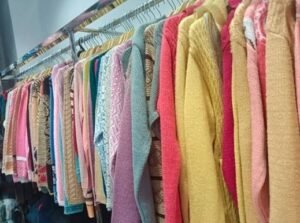

Looking for affordable sweaters, thermal wear or woollen garments for your clothing business? Understanding Ludhiana hosiery wholesale rates is an important first step before placing a bulk order.
Ludhiana, Punjab, is one of India’s established hosiery and knitwear manufacturing centres. The city supplies sweaters, thermals, cardigans, socks, sweatshirts and other winter garments to retailers and distributors across the country. However, wholesale prices vary depending on fabric quality, design, order quantity, supplier type and seasonal demand.
Whether you run a small garment shop, sell winterwear online or purchase clothing for distribution, knowing how these prices work can help you protect your margins.
In this guide, we’ll explore Ludhiana’s wholesale hosiery markets, the factors affecting winterwear prices, minimum order quantities, bulk discounts and practical ways to buy winter garments at competitive rates.
1. Why Is Ludhiana Famous for Wholesale Hosiery and Winterwear?
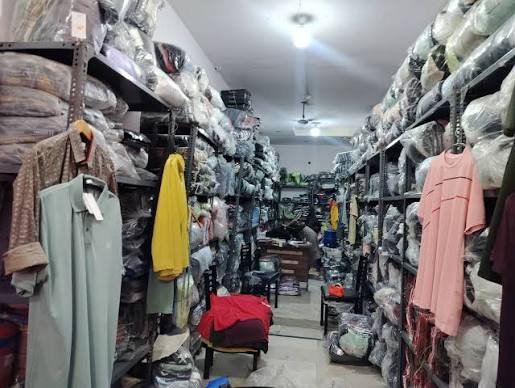
Ludhiana has built a strong reputation as a major manufacturing and trading centre for knitted garments.
Its textile ecosystem includes yarn suppliers, knitting units, garment manufacturers, wholesalers, distributors and transport businesses.
This concentration of businesses gives buyers access to numerous product categories and price segments.
Retailers can explore everything from affordable acrylic sweaters to premium knitwear, winter innerwear and fashion-oriented garments.
Why Do Wholesale Buyers Choose Ludhiana?
Ludhiana attracts garment buyers for several reasons:
- Established manufacturing base: Buyers can connect with knitwear manufacturers and wholesalers.
- Wide price range: Suppliers cater to economy, mid-range and premium clothing markets.
- Product variety: Sweaters, thermals, cardigans, socks and winter accessories are widely traded.
- Bulk purchasing opportunities: Larger orders may qualify for better unit rates.
- Customisation: Some manufacturers offer private labels, selected colours and made-to-order designs.
- Supplier competition: Buyers can compare quotations from multiple businesses.
However, not all wholesalers offer the same pricing structure.
A manufacturer producing sweaters in large quantities may quote differently from a trader selling assorted ready-stock garments.
Understanding these differences is essential when comparing Ludhiana hosiery wholesale rates.
2. Ludhiana Hosiery Wholesale Rates: What Determines the Price?
One of the most common questions from garment retailers is: What is the wholesale price of sweaters in Ludhiana?
There is no single market-wide price.
Even two sweaters that look similar can have different wholesale rates because of differences in yarn composition, weight, manufacturing quality and finishing.
Factors Affecting Hosiery Wholesale Prices
| Factor | Effect on wholesale pricing |
|---|---|
| Fibre composition | Pure wool, acrylic and blended materials have different raw-material costs |
| Garment weight | Heavier garments may require more yarn or fabric |
| Knitting quality | Better construction and finishing can increase production costs |
| Design complexity | Patterns, embroidery and special detailing may raise prices |
| Order quantity | Larger confirmed orders may receive volume discounts |
| Brand and packaging | Custom labels, tags and packaging can increase costs |
| Seasonal availability | Demand and available stock can influence negotiated rates |
| Supplier type | Manufacturers, distributors and traders have different cost structures |
Why Fabric Composition Matters
Consider two winter sweaters.
The first is made primarily from acrylic yarn, while the second contains a substantial proportion of wool.
Both may look similar on a shop shelf, but their raw-material costs, care requirements and performance characteristics can differ.
Therefore, comparing only their selling prices may lead to a poor purchasing decision.
Always ask suppliers to specify the fibre composition before comparing quotations.
Does Garment Weight Affect Wholesale Rates?
Garment weight can influence production cost, particularly when more yarn is required.
However, heavier does not automatically mean better.
A lightweight garment made with high-quality materials may cost more than a heavier one using inexpensive fibres.
Retailers should compare material quality, construction and intended use rather than weight alone.
3. Wholesale Sweater, Thermal and Winterwear Prices by Product Category
The Ludhiana hosiery wholesale rates quoted by suppliers depend heavily on the product category.
Some products are basic winter essentials, while others involve additional materials, more complicated construction or fashion-led designs.
Men’s Sweaters and Pullovers
Men’s sweaters are among the major products associated with Ludhiana’s knitwear trade.
Common options include:
- Crew-neck sweaters
- V-neck sweaters
- Full-sleeve pullovers
- Half-sleeve sweaters
- Acrylic knitwear
- Wool-blend sweaters
- Premium winter pullovers
Simple designs may cost less to produce than garments involving specialised patterns or complex construction, although material selection can reverse that difference.
Buying tip: Request separate quotations for each fabric composition and weight rather than accepting one general sweater price.
Women’s Cardigans and Winterwear
Women’s winterwear includes button-front cardigans, long sweaters, knitted tops, pullovers and other seasonal garments.
Rates can vary according to design, embellishments, buttons, material composition and finishing.
Fashion-oriented products may also carry greater inventory risk because popular styles change between seasons.
Small retailers should compare trendy designs with regular, repeat-selling basics.
Thermal Wear Wholesale Rates
Thermal clothing is a significant winterwear category.
Wholesale suppliers may offer:
- Men’s thermal tops and bottoms
- Women’s thermal sets
- Children’s thermal wear
- Cotton-blend winter innerwear
- Polyester and blended thermal fabrics
When comparing thermal wear wholesale rates, check fabric composition, thickness, elasticity and washing performance.
A low-cost thermal set may not necessarily offer the warmth or durability expected by customers.
Socks, Caps, Gloves and Mufflers
Winter accessories are useful for retailers looking to offer affordable add-on products.
Products include woollen socks, knitted caps, gloves, mufflers and neck warmers.
Wholesale pricing may depend on whether products are sold individually, in dozens, by design or in larger cartons.
Before ordering, confirm the number of units included in each quoted pack.
Sweatshirts, Hoodies and Jackets
Ludhiana suppliers also deal in casual winterwear such as sweatshirts, hoodies, tracksuits and jackets.
These products have different pricing considerations.
For example, a hoodie may involve fleece fabric, ribbed cuffs and a drawstring, while a padded jacket may require outer fabric, lining, insulation, zippers and additional finishing.
Compare quotations using identical specifications whenever possible.
4. Best Ludhiana Markets for Comparing Hosiery Wholesale Rates
If you want to compare suppliers, Ludhiana offers several established trading areas and industrial clusters.
Rather than relying on just one quotation, visiting different markets can help you understand product availability and pricing structures.
Chaura Bazaar and Dal Bazaar
Chaura Bazaar is a longstanding commercial area in Ludhiana.
The surrounding lanes, including parts of Dal Bazaar, are relevant to buyers exploring hosiery and readymade garments.
Retailers can enquire about sweaters, cardigans, children’s knitwear, socks and winter accessories.
Why compare rates here?
Traditional trading areas allow buyers to explore multiple sellers and compare available stock.
Some traders may offer assorted-size packs or mixed designs, depending on their business model.
Akal Market and Akalgarh Trading Area
Akal Market and the surrounding garment trading area are useful for buyers exploring readymade clothing and seasonal garments.
Products may include sweaters, sweatshirts, jackets and other winterwear.
Ask sellers whether their quotation applies to ready stock, a fixed-size assortment or a minimum number of pieces per design.
Gandhi Market and Gandhi Nagar
Gandhi Market in the Chaura Bazaar area and the separate Gandhi Nagar hosiery trading area are additional locations worth investigating.
Buyers should confirm exact supplier addresses because these are not the same market.
Different wholesalers may cater to different garment categories and purchasing volumes.
Kalyan Nagar and Nearby Hosiery Trading Areas
Kalyan Nagar and surrounding areas have hosiery-related trading and manufacturing activity.
These neighbourhoods can be useful for identifying suppliers dealing in knitted garments and seasonal winterwear.
Contact businesses before visiting to confirm their specialities and minimum order requirements.
Industrial Area-A, Bahadur Ke Road and Focal Point
Retailers purchasing larger quantities should also explore manufacturing suppliers in Ludhiana’s industrial areas.
Industrial Area-A, Bahadur Ke Road and Focal Point are relevant to the city’s wider textile and garment production network.
Manufacturers may be suitable for businesses requiring repeat production, consistent specifications or custom branding.
However, lower manufacturing costs do not automatically translate into lower prices for every order.
Factories may require substantial minimum quantities, advance payments and production lead times.
Best approach: Compare factory quotations against ready-stock wholesalers after including freight, taxes, packaging and any unsold inventory risk.
5. Ready-Stock Wholesale Rates vs Factory-Direct Prices
There are two common ways of buying winterwear in Ludhiana.
Buying Ready-Stock Winterwear
Ready-stock wholesalers sell garments that have already been manufactured.
This option may be suitable for:
- Small clothing retailers
- New garment businesses
- Online resellers
- Traders testing unfamiliar designs
- Buyers requiring faster dispatch
Ready stock offers the advantage of selecting existing designs without waiting for manufacturing.
However, the buyer may have limited control over fabric specifications, colours and size combinations.
The per-piece rate may also include the trader’s distribution margin.
Buying Directly from Hosiery Manufacturers
Factory-direct purchasing can be useful for businesses placing large or repeat orders.
Depending on the supplier, buyers may be able to specify:
- Fabric and yarn composition
- Garment sizes
- Colours and designs
- Labels and branding
- Packaging
- Production quantities
Manufacturers may quote competitive rates for standardised bulk production.
However, custom orders can involve development costs, larger MOQs and longer manufacturing schedules.
When evaluating Ludhiana hosiery wholesale rates, calculate the total cost rather than assuming that factory-direct purchasing is always cheaper.
6. How Minimum Order Quantity Affects Wholesale Prices
Minimum Order Quantity, commonly called MOQ, is the minimum quantity a supplier agrees to sell.
MOQ is an important factor in wholesale garment pricing.
A seller may quote one rate for a small order and another for a larger purchase.
However, quantity discounts are not automatic.
Common MOQ Arrangements
Suppliers may specify minimum quantities:
- Per garment design
- Per colour
- Per size
- Per assorted pack
- Per product category
- Per complete purchase order
For example, imagine a wholesaler offers a sweater design in six sizes.
They might require the buyer to purchase a fixed combination of sizes rather than choosing only the most popular ones.
Another supplier may allow more flexible size combinations but quote a higher unit price.
For a small retailer, that flexibility can sometimes be worth paying for.
How to Negotiate Bulk Hosiery Rates
Before negotiating, request a written quotation showing product specifications, quantities and applicable taxes.
Then compare quotations for several order sizes.
For example, ask suppliers to quote separately for 50, 100 and 250 pieces, if those volumes are relevant to your business.
These are illustrative enquiry quantities, not standard Ludhiana MOQs.
Also ask about:
- Mixed-size packs
- Mixed-colour orders
- Repeat-order discounts
- Unsold-stock exchange policies
- Defective-goods replacement
- Packaging charges
- Freight arrangements
A slightly higher unit rate with flexible quantities and dependable supply may be a better commercial choice than a very low rate tied to excessive stock.
7. How to Calculate the Actual Cost of Wholesale Winterwear
The quoted factory or wholesale rate is only one part of the purchasing cost.
Retailers should calculate their landed cost, which includes the expenses involved in getting the goods into saleable inventory.
Illustrative Wholesale Purchase Calculation
Suppose a retailer purchases 100 sweaters at a negotiated supplier rate of ₹250 per piece.
| Cost component | Illustrative amount |
|---|---|
| 100 sweaters × ₹250 | ₹25,000 |
| Freight and handling | ₹1,500 |
| Additional packaging | ₹500 |
| Total before applicable taxes | ₹27,000 |
| Cost per sweater before applicable taxes | ₹270 |
These figures are hypothetical and are not verified current Ludhiana market rates.
The calculation shows why a quoted ₹250 sweater does not necessarily cost the retailer only ₹250.
Applicable GST and the treatment of recoverable input tax credit should be considered separately according to the buyer’s tax circumstances.
Understanding Wholesale Margins
Suppose the retailer’s landed cost is ₹270 per sweater and it sells for ₹400.
The gross difference is ₹130 per sweater.
That represents a gross margin of 32.5% on the selling price, before accounting for relevant taxes, shop expenses, returns, discounts and other operating costs.
It is important to distinguish markup, calculated on cost, from gross margin, calculated on selling price.
Understanding this difference helps retailers avoid setting prices based on misleading assumptions.
8. When Are Ludhiana Hosiery Wholesale Rates Most Competitive?
Winterwear is a seasonal business, and purchasing decisions should reflect expected customer demand.
Wholesale prices do not necessarily follow the same seasonal pattern across every product or supplier.
Nevertheless, timing can influence available designs, manufacturing capacity and buyers’ negotiating options.
Pre-Season Purchasing
Retailers often begin evaluating winter collections well before customers start buying.
For many northern Indian markets, the period from July to September can be useful for sampling, selecting designs and confirming purchases.
Placing orders early gives buyers more time to arrange transport and manage potential production delays.
Peak Winter Demand
During the main winter selling season, popular sizes and designs may become harder to replenish.
Ready-stock availability can be more important than obtaining a small discount.
Retailers should monitor sales closely and reorder proven products instead of purchasing every new style offered by suppliers.
End-of-Season Buying
Some traders may offer clearance opportunities when winter demand begins to decline.
However, discounted products are not automatically good investments.
Consider the storage cost, possibility of outdated designs and the risk of carrying inventory until the following winter.
Suggested Purchasing Calendar
| Period | Retailer activity |
|---|---|
| April–June | Research suppliers and review previous winter’s sales |
| July–August | Compare samples, quotations and order terms |
| August–September | Confirm major pre-season purchases |
| October–November | Monitor sales and replenish popular products |
| December–January | Manage inventory and evaluate selective reorders |
| February–March | Review clearance opportunities and remaining stock |
These are suggested planning periods. Actual buying seasons vary by geography, climate and supplier.
9. How to Check Winterwear Quality Before Accepting Wholesale Rates
A supplier offering attractive Ludhiana hosiery wholesale rates is useful only if the garments meet your customers’ expectations.
Poor quality can result in returns, complaints and lost repeat business.
Check Fibre Composition
Ask for the material specification.
Do not assume that all woollen-looking sweaters contain pure wool.
Compare garments based on their stated fibre composition and intended use.
Inspect Stitching and Knitting
Check seams, cuffs, collars and other stress points.
Look for loose threads, uneven knitting and weak stitching.
Test Shrinkage and Colour Fastness
Wash a sample according to the care instructions.
Check for noticeable shrinkage, colour bleeding and fabric distortion.
For substantial orders, formal testing may be appropriate.
Examine Finishing
Inspect zippers, buttons, labels, embroidery and packaging.
Poor finishing can reduce perceived garment value even when the fabric is acceptable.
Confirm Replacement Conditions
Before paying an advance, obtain written agreement on the treatment of damaged, defective or incorrect goods.
This becomes particularly important when purchasing remotely.
10. Tips to Get Better Ludhiana Hosiery Wholesale Rates
Retailers can improve their purchasing decisions by taking a systematic approach.
Compare equivalent products. Don’t compare a basic acrylic sweater with a premium wool-blend garment simply because both are described as winter sweaters.
Request multiple quotations. Ask at least three relevant suppliers for prices against the same specifications.
Calculate landed cost. Include freight, packaging, taxes where applicable and handling expenses.
Avoid unnecessary bulk purchases. A large order may reduce the unit rate but increase the risk of unsold stock.
Verify suppliers. Confirm the business address, invoice details, product samples and payment terms.
Build relationships with reliable wholesalers. Consistent repeat business may help when negotiating future orders, although discounts are never guaranteed.
Start with tested products. For unfamiliar suppliers, place a manageable trial order wherever practical before committing to large quantities.
The objective is not simply to obtain the lowest possible wholesale rate.
It is to purchase garments that customers will buy, at a cost that leaves sufficient room for a sustainable retail margin.
11. Frequently Asked Questions About Ludhiana Hosiery Wholesale Rates
What are the wholesale rates of sweaters in Ludhiana?
Wholesale sweater rates depend on fibre composition, garment weight, knitting quality, design, order quantity and supplier type. There is no single standard price applicable to all sellers. Request current quotations for identical specifications before comparing rates.
Where can I find affordable hosiery in Ludhiana?
Buyers can investigate Chaura Bazaar, Akal Market, Gandhi Market, Gandhi Nagar and Kalyan Nagar. For manufacturing enquiries, explore relevant suppliers in Industrial Area-A, Bahadur Ke Road and Focal Point.
Are factory prices lower than wholesale market prices?
Factory-direct rates may be competitive for substantial orders, but factories can have higher MOQs and additional production requirements. Ready-stock wholesalers may offer better flexibility for smaller buyers. Compare total landed costs before deciding.
Can small retailers buy winterwear in bulk?
Yes. Some traders accept smaller wholesale orders or mixed assortments. Minimum quantities vary between suppliers and product categories.
Do Ludhiana hosiery wholesale rates change during winter?
Rates and product availability can change with demand, material costs, inventory and supplier capacity. There is no universal seasonal price pattern, so buyers should request updated quotations.
How can I compare wholesale sweater prices?
Prepare a standard product specification covering material, size, weight, design, quantity, packaging and delivery location. Ask multiple suppliers to quote against the same requirements, then compare landed costs.
When should I order winterwear for my shop?
For many northern Indian markets, researching suppliers during summer and finalising major purchases before peak winter can provide more time for quality checks and delivery. Confirm lead times directly with each supplier.
Conclusion: Getting the Best Value from Ludhiana Hosiery Wholesale Suppliers
Ludhiana remains an important destination for Indian retailers and distributors sourcing sweaters, thermals, cardigans, socks and other winter garments.
But getting good value requires more than finding a low quoted price.
The most effective approach is to compare Ludhiana hosiery wholesale rates alongside fabric quality, minimum order quantities, supplier reliability, freight expenses and seasonal inventory requirements.
A well-planned purchase can help retailers maintain healthier margins while offering customers winterwear that meets their expectations.
Whether you’re opening a small garment shop or expanding an established clothing business, take time to evaluate supplier quotations and understand the true cost of every order.
Looking for more wholesale pricing information? Explore wholesale-rates.com for practical guides to garment wholesale prices, bulk buying, sourcing markets and profitable purchasing decisions across India.
See Also
- Woollen sweaters Cardigans के किंग, Cardigan Manufacturer, Asia’s Biggest Woolen wholesale Market
- Wholesale Market Ludhiana | Starting 110₹ only
- Tiruppur T-Shirt Wholesale Price Guide: Factory Rates, Bulk Buying & Profit Margins
- Wholesale Saree Market India: Best Markets, Wholesale Rates & B2B Sourcing Guide
- Wholesale Cloth Market in India: Best Markets to Buy Cloth at Wholesale Rates
- Sourcing Woolens from Ludhiana Wholesale Market: Complete Guide for Retailers
